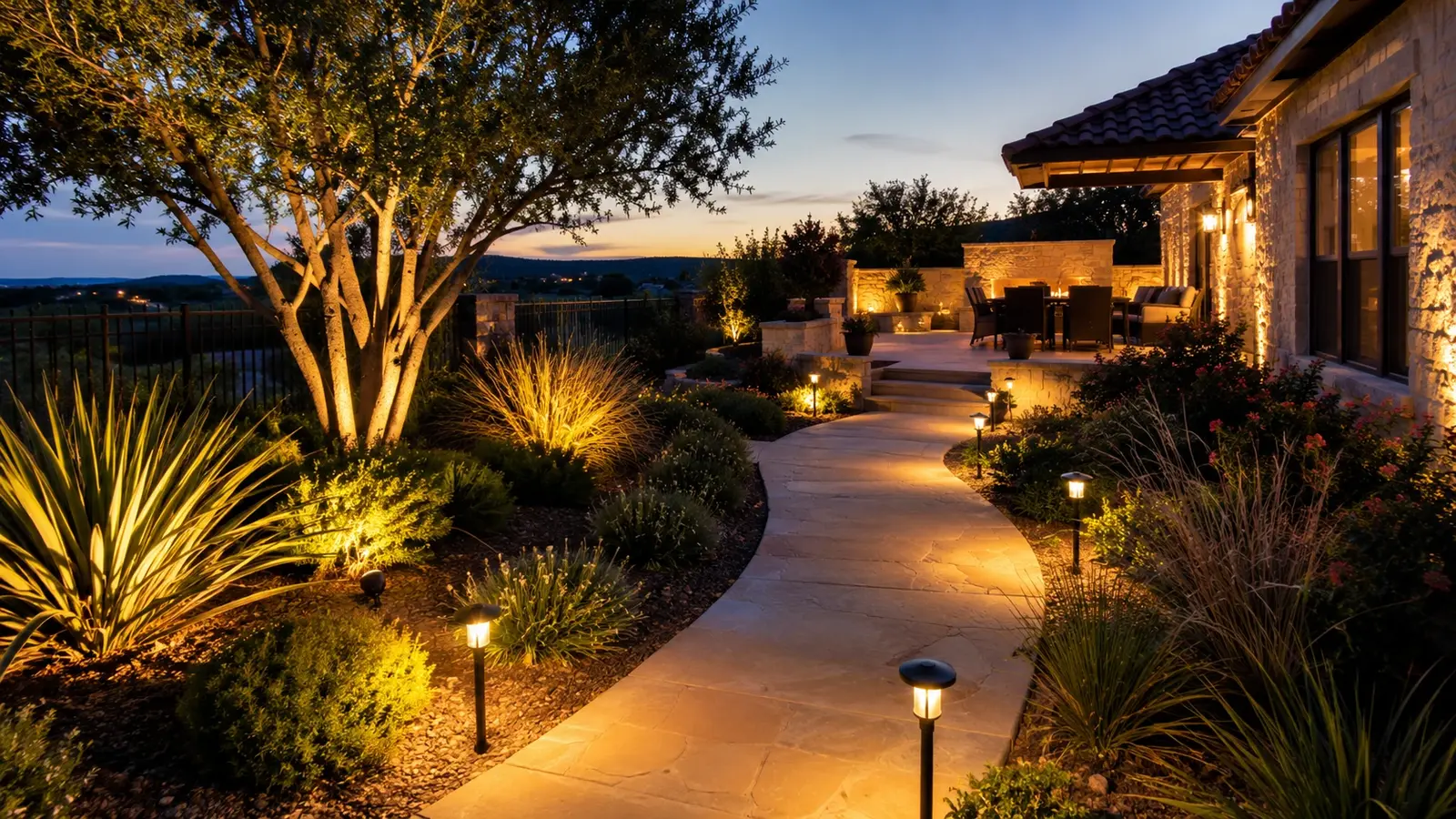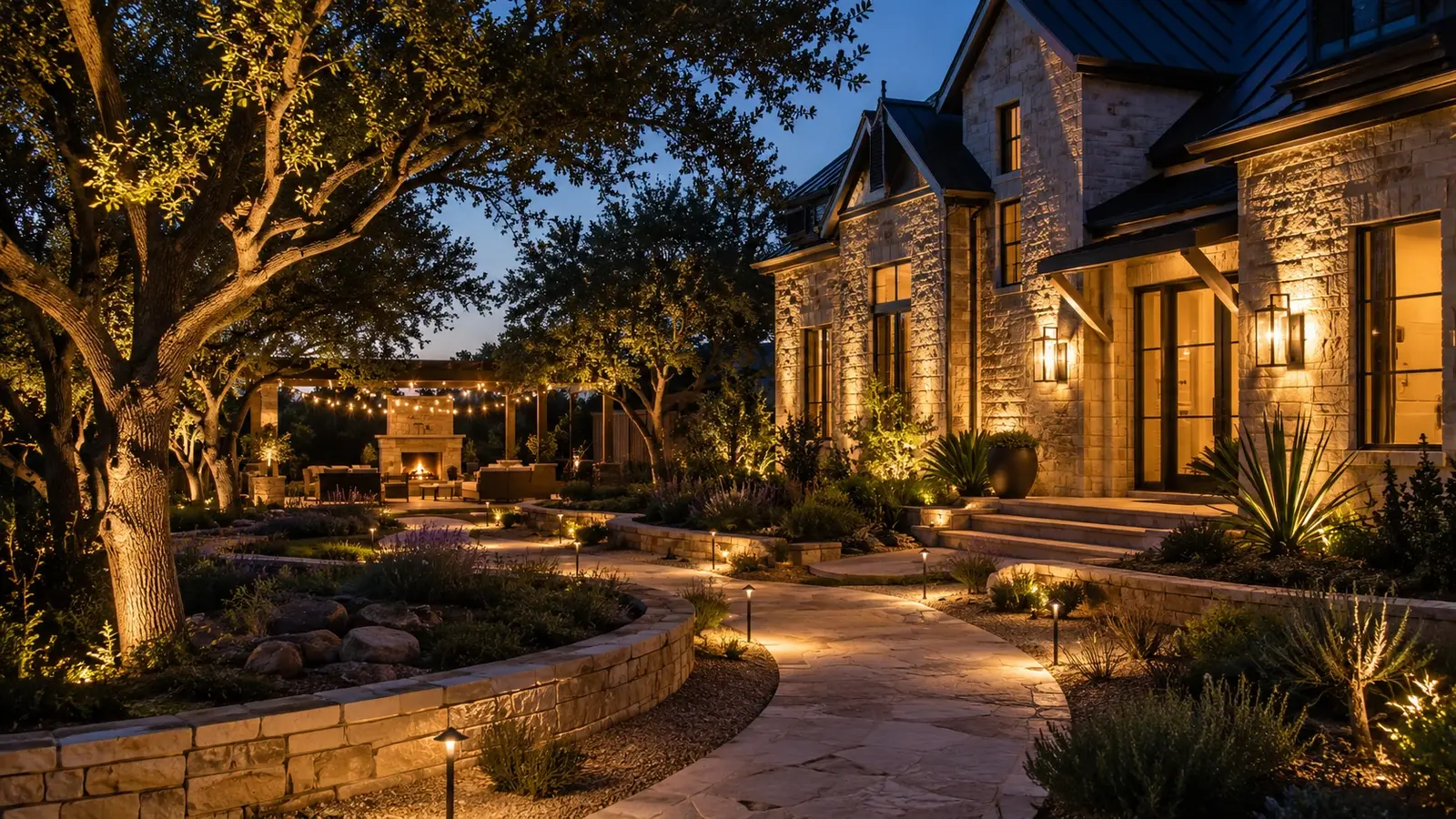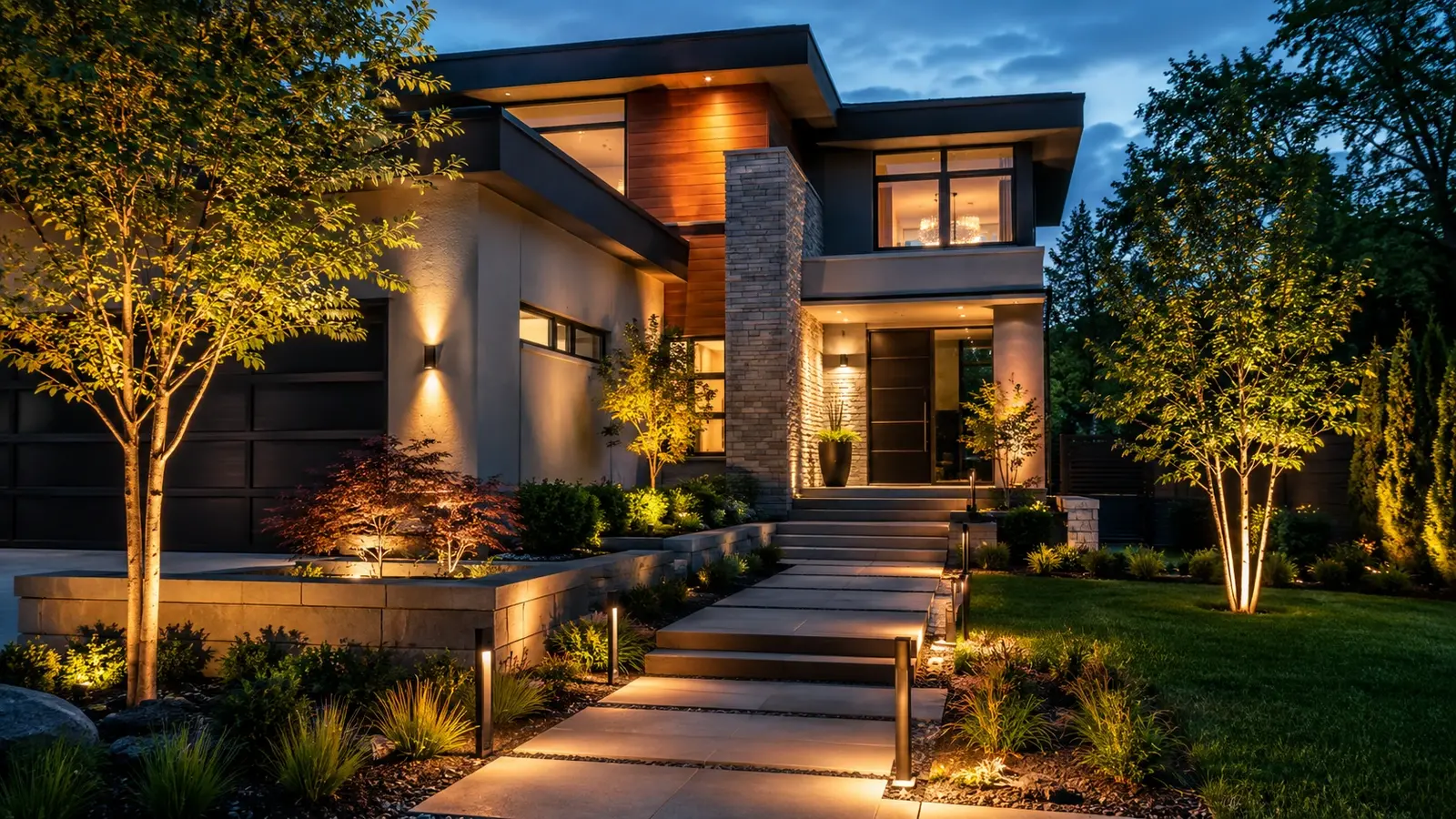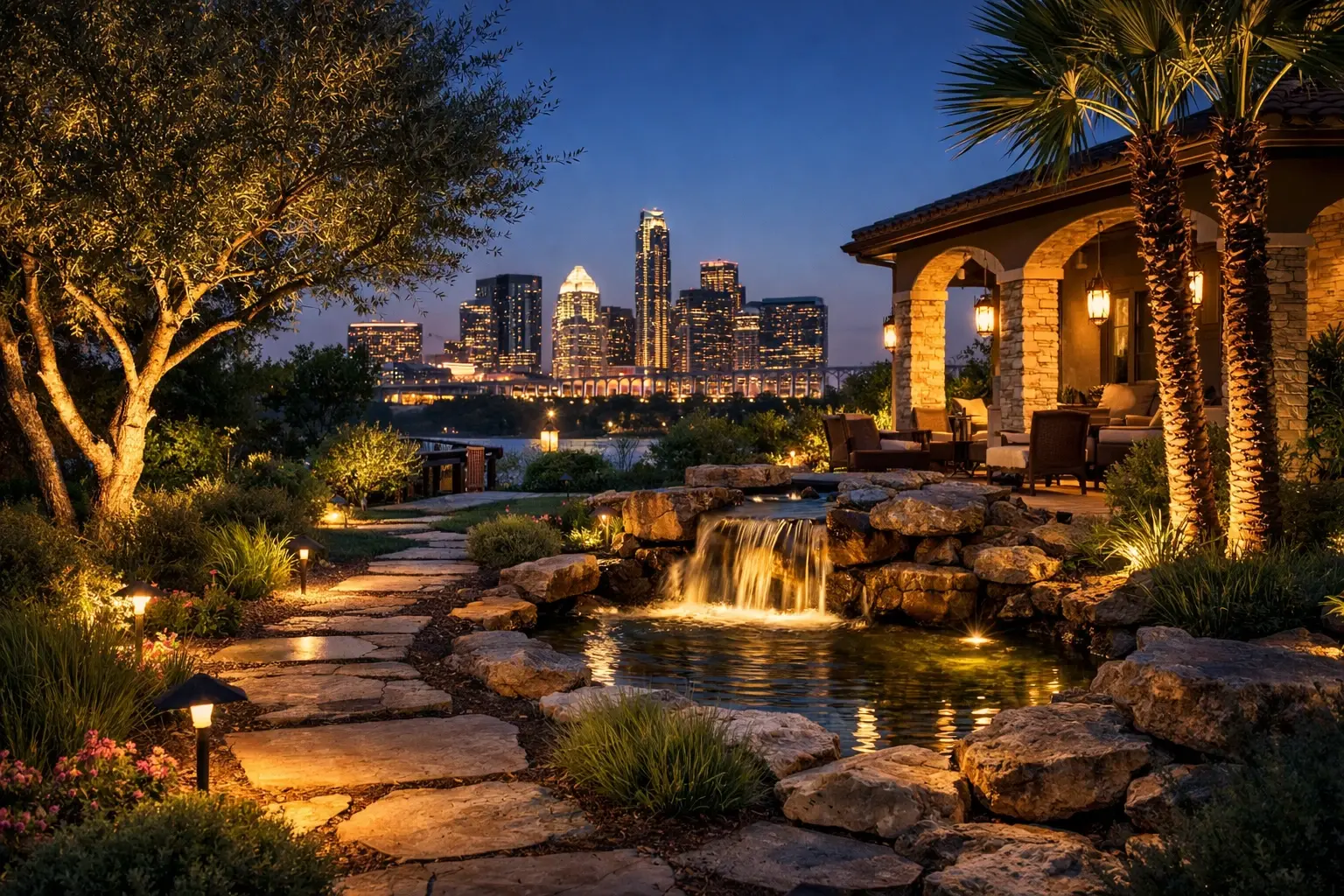
Search for a landscape lighting company Austin homeowners trust and you will find landscapers who add lights as a sideline, electricians who run cable but do not design, national franchises, and a handful of dedicated local lighting specialists. The differences between them show up at night, and again three years later when fixtures either still work or do not. This guide gives you a practical checklist for sorting through options: the questions to ask, the answers that should concern you, and the standards for fixtures, warranty, insurance, and process that separate a 20-year installation from a 3-year one. Austin Landscape Lighting is one of those local specialists, and we have written this to be useful whether or not you call us.
Start With How They Design
The single most revealing question is: what is your design process? A specialist will describe a night walk of your property, a conversation about what you want to see from the street and the patio, a plan that ranks focal points, and a demonstration with real fixtures after dark. A company that skips straight to a fixture count and a price is selling hardware, not design.
Ask who does the design. Is it the person who visits your property, or a sales representative who passes notes to a crew? Ask how they decide between uplighting, grazing, washing, silhouetting, and moonlighting for a given feature. Ask how they handle a multi-trunk live oak versus a single-trunk cedar elm. Anyone who installs lighting in Austin should answer that without hesitation: cross-light the oak from two or three angles, spot the elm from one.
A design-first company will also talk about restraint. Good designers routinely recommend fewer lights than homeowners expect.
Insist on a Night Demonstration
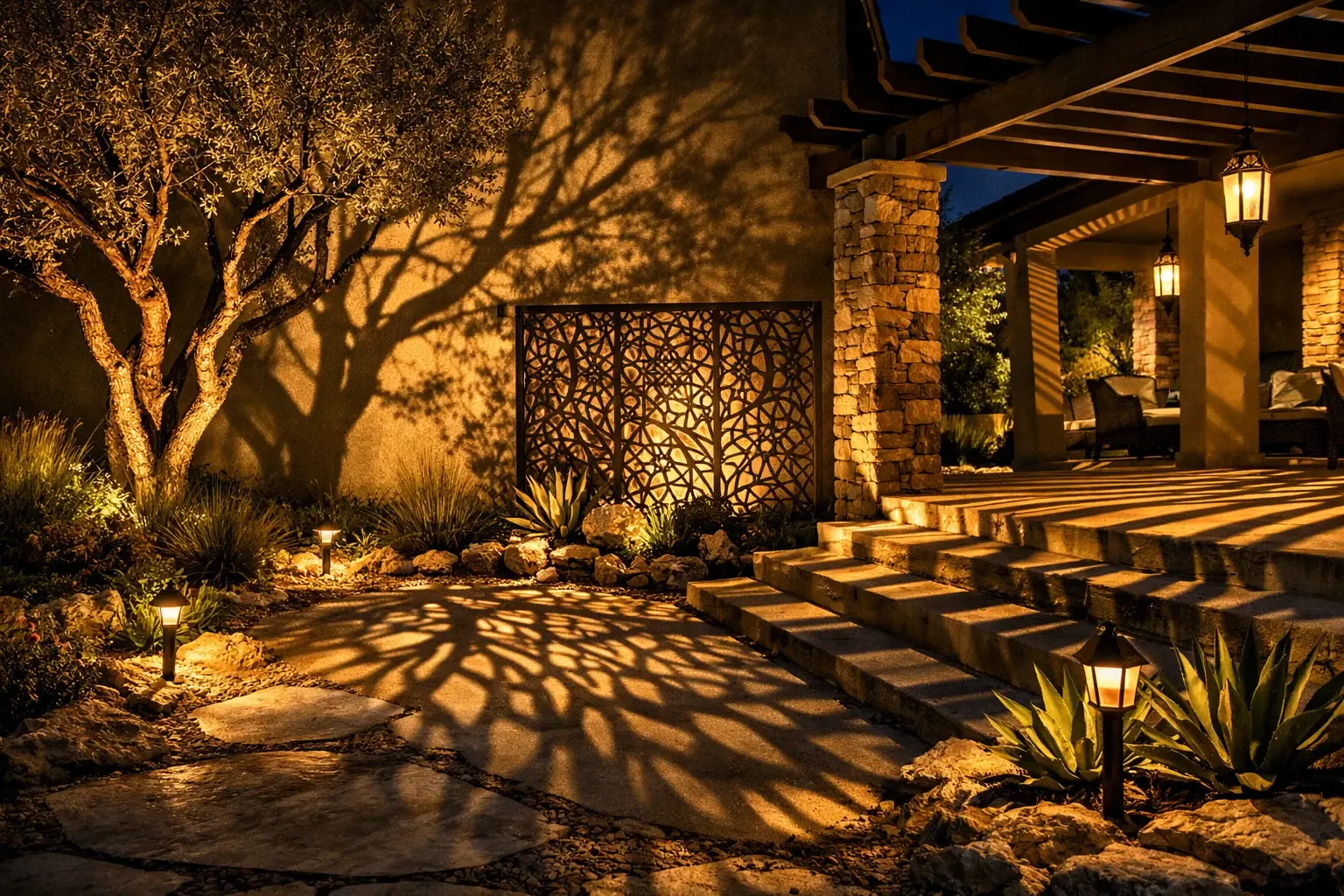
Landscape lighting cannot be judged on paper or in daylight. The best companies bring demonstration fixtures, a portable transformer, and extension cable to your property after dark and set up the key elements of the proposed design so you can stand at the street and the patio and see it. It is the only way to confirm the designer's vision matches yours before money changes hands.
A company that will not do a night demo, or that charges heavily for one, is asking you to trust a rendering. Renderings are useful, and our lighting visualizer is a fine starting point, but they are not a substitute for seeing a 2700K beam on your own limestone.
Ask What Fixtures They Install and Why
Fixture material is the clearest predictor of how long a system will last. Austin summers push 100 degrees for weeks, irrigation water leaves mineral scale, and deer in the Hill Country edges knock over anything flimsy. Solid brass and copper fixtures handle all of it for 20 years or more. Powder-coated aluminum chalks, pits, and corrodes in three to six years. Plastic and composite are worse.
Ask the company to name the brands and materials they install, and ask to hold a sample. Ask whether lamps are integrated or interchangeable. Integrated LED fixtures are fine from top manufacturers, but interchangeable lamps let beam spreads be changed from 15 to 60 degrees during the night test and replaced in a decade without replacing the fixture. Ask what color temperature they standardize on. The answer should be 2700K warm white for residential work, with a reason for any deviation.
Ask about the transformer and cable too. A multi-tap magnetic transformer in a steel case, 12 or 10-gauge direct-burial cable, hub wiring, and gel-filled waterproof connectors are the professional standard. Pierce-type connectors and a plastic transformer are not.
Verify Licensing and Insurance
Low-voltage landscape lighting does not require an electrical license in Texas for the 12V side, but any company connecting a transformer to a new 120V circuit or installing a GFCI outlet must use a licensed electrician. Ask how they handle that step. More importantly, ask for proof of general liability insurance and workers' compensation coverage. A crew digging trenches and climbing trees on your property without coverage puts you at risk if someone is injured or a utility line is struck.
Ask whether they call 811 before digging. Texas requires utility locating before excavation, and a company that skips it is cutting corners you cannot see.
Read the Warranty Carefully
There are two warranties on every landscape lighting system. The manufacturer covers fixtures, often for life on brass housings and 5 to 15 years on LED components. The installer covers workmanship: connections, cable, aiming, transformer mounting, and everything else that can fail from poor installation rather than a defective part.
Ask for the workmanship warranty in writing and ask what it covers. One year is common. Two years, which Austin Landscape Lighting provides, is better. Ask what the process is if a fixture dims or a zone goes dark, and how quickly they respond. Ask whether a follow-up aiming visit is included, since small adjustments almost always emerge.
Check Local References and Reviews
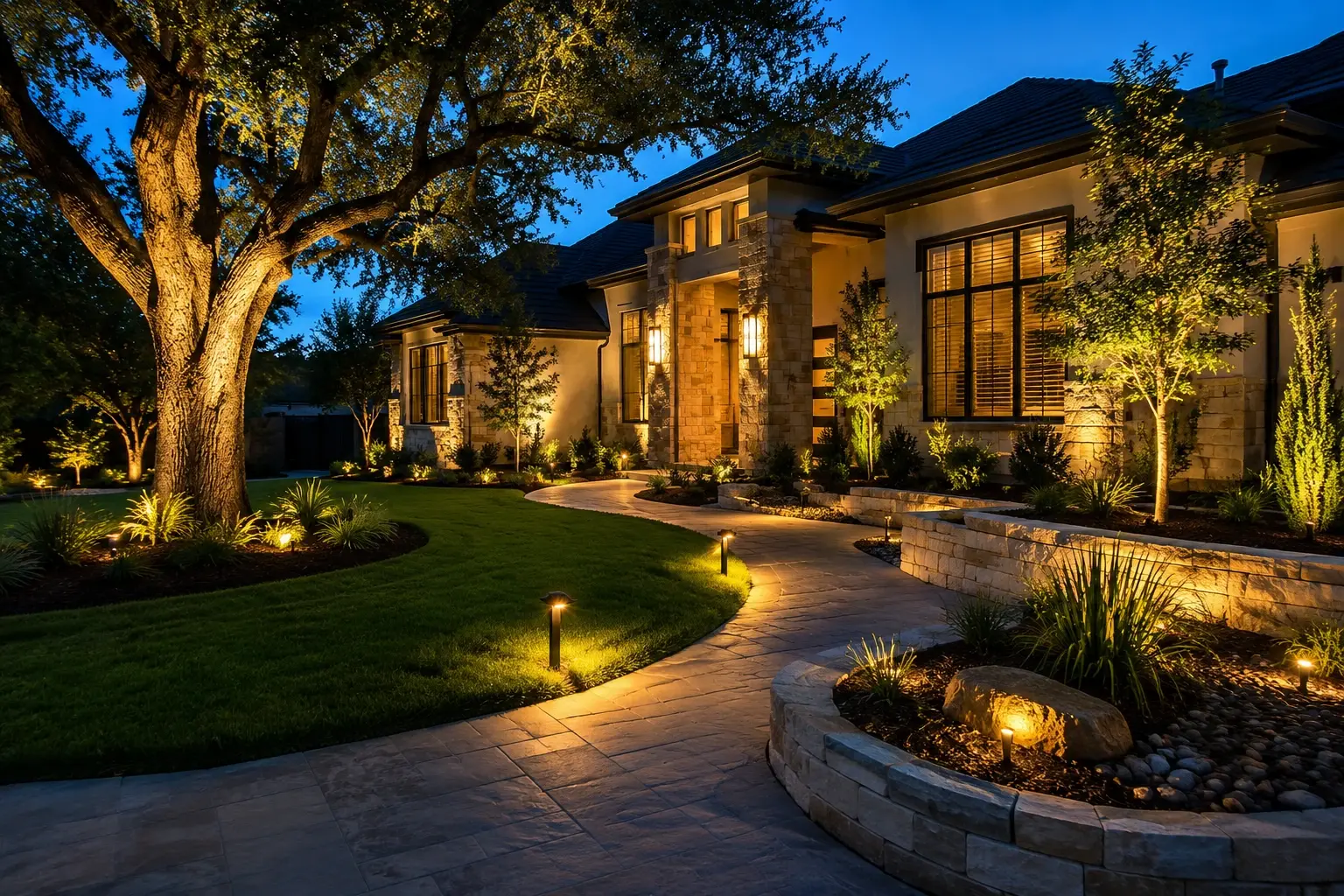
Any established Austin company should be able to point you to lit properties nearby that you can drive past after dark. Ask for two or three addresses in your part of town, whether that is Hyde Park, Circle C, Steiner Ranch, or Lakeway. Seeing a three-year-old installation tells you more about longevity than a portfolio of fresh installs.
Read Google reviews with attention to detail. Look for mentions of design quality, responsiveness after installation, and how problems were resolved. A rating in the high 4s with over a hundred reviews is a solid signal. Ask how long the company has been operating and how many projects they have completed. Austin Landscape Lighting has been installing since 2020 with more than 500 completed projects and a 4.9-star rating across 127 Google reviews, and we encourage prospective clients to check that for themselves. Our project gallery shows the range of work.
Compare Estimates on Substance, Not Just Price
A proper written estimate itemizes fixtures by type and brand, lamp wattage and color temperature, transformer capacity, cable gauge, control type, labor, and both warranties. It states whether design, night aiming, and a follow-up visit are included. When two estimates differ by a thousand dollars, the fixture schedule usually explains why. Twelve brass fixtures on a 150 watt transformer with a smart controller is not the same product as twelve aluminum fixtures on a plastic transformer with a mechanical timer.
The table below summarizes the comparison points that matter most.
| What to check | Strong answer | Warning sign |
|---|---|---|
| Design process | Night walk, focal point hierarchy, written plan | Fixture count and price on the first visit |
| Night demonstration | Included or low cost, with real fixtures | Refused or replaced by renderings only |
| Fixture material | Solid brass or copper, named brands | Aluminum, plastic, or vague "commercial grade" |
| Color temperature | 2700K warm white standard | No answer, or whatever is in stock |
| Transformer and wiring | Multi-tap magnetic, hub layout, gel connectors | Plastic transformer, daisy chain, pierce clamps |
| Insurance | Liability and workers comp provided on request | Hesitation or no documentation |
| Workmanship warranty | Written, 2 years, clear claim process | Verbal, 90 days, or unspecified |
| References | Local addresses you can drive past at night | Only stock photos |
| Estimate detail | Itemized fixture schedule and components | Single lump sum |
| Dark-sky and HOA | Shielded fixtures, timers, familiarity with local rules | No awareness of glare or lights-off hours |
Warning Signs to Walk Away From
A few patterns show up repeatedly in installations that fail or disappoint.
Pressure to sign the same night
Legitimate companies provide a written estimate and expect you to think about it. Steep discounts that expire in 24 hours are a sales tactic, not a design service.
Fixtures that cannot be named
If the answer to "what brand and material" is a brochure with no manufacturer on it, the fixtures are probably imported aluminum with a markup.
No mention of voltage drop or transformer headroom
Anyone sizing a 12V system should talk about keeping load under 80 percent of transformer capacity and using multi-tap outputs for long runs. Silence on this point predicts dim far zones.
Lighting as an afterthought
A landscaper or pool builder who offers to add lights at the end of a bigger job rarely designs them. The result is usually a string of path lights and a few uplights in whatever positions were convenient.
No plan for controls
If the only option offered is a mechanical timer, the company has not kept up. Astronomical timers, photocells, and app-based zone control are standard, and our smart lighting systems page explains what each offers.
Questions to Ask Before Signing
Bring this list to any consultation.
How long have you been installing landscape lighting in Austin, and how many projects have you completed? Who designs the system, and will they be on site during installation? Will you demonstrate the design at night before I commit? What fixture brands and materials do you install, and may I hold one? What color temperature and beam spreads do you use, and why? How do you size the transformer and manage voltage drop? Are you insured for liability and workers' compensation? What does your workmanship warranty cover and for how long? Is a follow-up aiming visit included? Can you give me addresses of local installations I can see at night? How do you handle HOA guidelines and dark-sky shielding? What does ongoing maintenance look like and what does it cost?
A company that answers all of these clearly and without defensiveness is one you can trust with your property.
What Working With a Specialist Should Feel Like
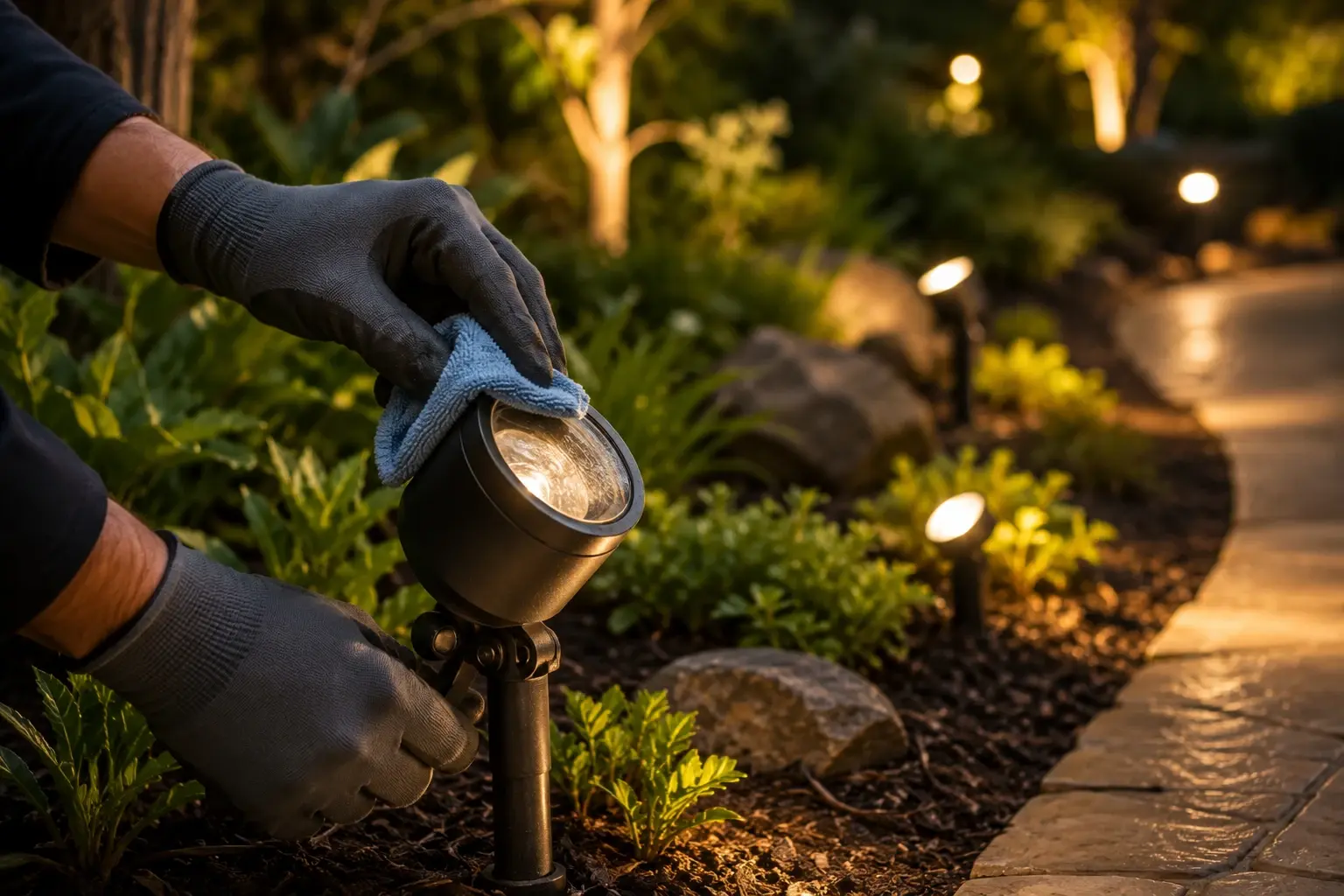
From first contact to final aiming, the process should feel collaborative and unhurried. You should understand why each fixture is where it is. You should see the design at night before paying a deposit. The installation should finish in a day or two with beds left tidy. A few weeks later someone should return to fine-tune aim and swap any lamp spreads that look off. And when you call two years later because a connection has corroded, someone should answer and fix it.
Choosing a landscape lighting company in Austin is mostly a matter of asking the right questions and paying attention to the answers. Austin Landscape Lighting offers a free on-site consultation with a night demonstration, written itemized estimates, solid brass and copper fixtures, and a 2-year workmanship warranty on every installation. Call +1 (281) 704-7210 or contact us online to see whether we are the right fit for your property.
Frequently asked questions
Does a landscape lighting company in Texas need an electrical license?
The 12V low-voltage side of a landscape lighting system does not require an electrical license in Texas, but connecting a transformer to a new 120V circuit or installing a GFCI outlet does. Ask how the company handles that step. Regardless of licensing, verify general liability and workers compensation insurance before any crew digs or climbs on your property.
What warranty should a landscape lighting installer offer?
Expect two warranties. Manufacturers typically cover brass fixture housings for life and LED components for 5 to 15 years. The installer should provide a written workmanship warranty covering connections, cable, aiming, and transformer installation. One year is common and two years is better. Ask about the claim process and whether a follow-up aiming visit is included.
Why does a night demonstration matter when hiring a lighting company?
Landscape lighting cannot be judged in daylight or from a drawing. A demonstration with real fixtures and a portable transformer lets you stand at the street and the patio and see the proposed design on your own trees and stone before paying anything. Companies that refuse a demo or rely only on renderings are asking you to trust an outcome you have not seen.
What fixture material should a landscape lighting company use in Austin?
Solid brass or copper. Austin summers, irrigation mineral scale, and deer traffic destroy powder-coated aluminum within three to six years, while brass develops a patina and lasts 20 years or more. Ask the company to name the brands they install, ask to hold a sample, and confirm lamps are 2700K warm white with interchangeable or high-quality integrated LEDs.

Written by the design team at Austin Landscape Lighting. We design, install and maintain low-voltage LED landscape lighting across Austin and the Hill Country. Questions about your property? Book a free dusk consultation or call +1 (281) 704-7210.