
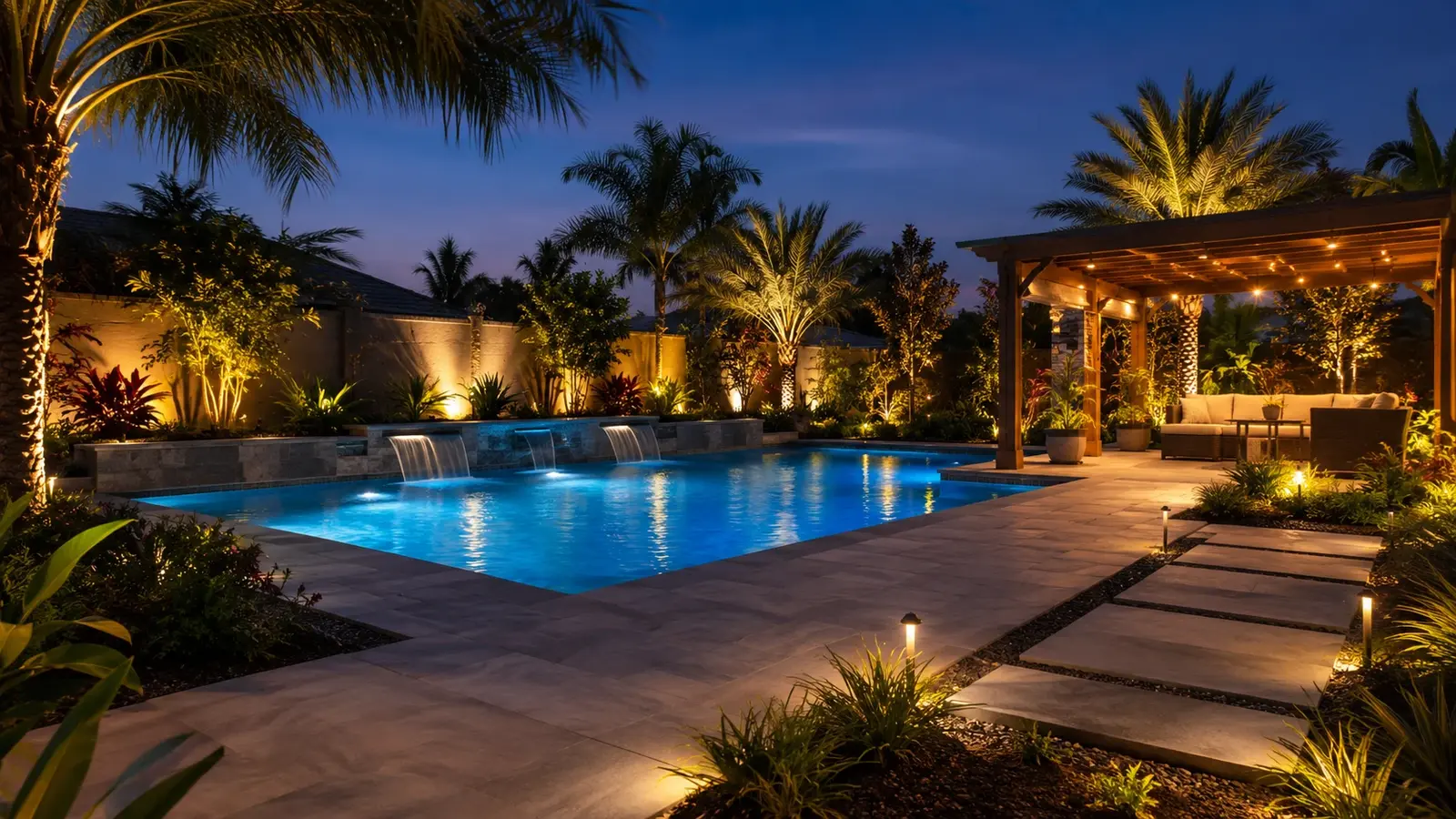
- No reflections off the water
- Code-aware fixture clearances
- Waterfall and fountain accents
- Coordinated with pool builders
Lighting Around Water Is a Different Discipline
A pool at night is a 400-square-foot mirror. Every fixture you can see from the patio is reflected in the water, which means a single badly placed spotlight shows up twice. At the same time, the pool deck is the most important place on the property for safety lighting: wet limestone, coping edges, tanning ledges and steps all need to be readable without being bright. Pool landscape lighting Austin homeowners are happiest with manages both problems by lighting the things around the pool, not the pool itself, and by keeping sources below eye level and shielded.
There is also a safety and code dimension. Electrical rules for anything near a pool are strict, including minimum distances for low-voltage fixtures, transformer placement and bonding requirements. Austin Landscape Lighting installs the landscape side of pool lighting in coordination with your pool builder or pool electrician, who handles the in-pool and in-spa lights. That division keeps the project compliant and keeps each trade doing what it does best.
Our Design Method Around Pools
Start with what reflects
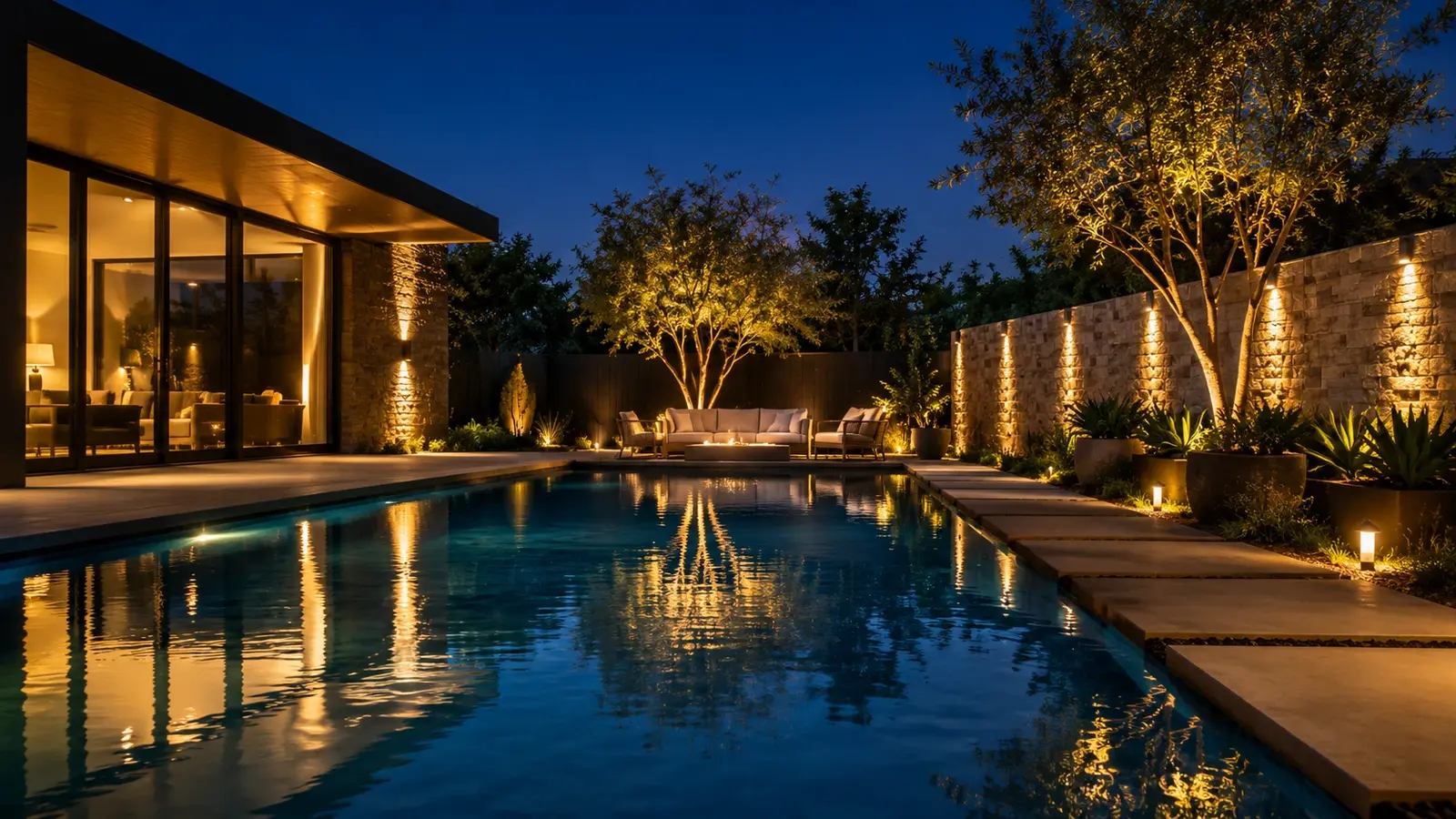
We walk the deck at dusk and look at the water from every seating position, including inside the house. Anything that would reflect as a bright point is either moved, shielded or aimed away. The best pool lighting typically uses no fixtures at all within the first several feet of the water's edge, relying instead on light from beyond it.
Light the perimeter, borrow for the deck
Uplit trees and shrubs beyond the pool, grazed limestone walls and lit outdoor kitchens create a glowing perimeter. That perimeter light bounces across the deck surface at a low level, enough to see the coping and the steps. Where more is needed, we use hardscape lights set into retaining walls, raised beam walls and planter caps, aimed down across the deck. Recessed step lights handle any grade change.
Treat water features as sculpture
- Waterfalls and sheer descents. A narrow spot aimed across the falling water from the side catches the texture of the stream without lighting the catch basin. Light from directly in front flattens it.
- Bubblers and deck jets. Small submersible 12V fixtures rated for the application light the arc of water from below; the pool builder typically installs these and we coordinate aiming.
- Fountains and spillover spas. A grazing fixture on the stone face of a raised spa shows the water sheeting over it. Keep the output low; wet stone reflects more than you expect.
- Ponds and natural features. Submersible fixtures beneath a waterfall and uplights on the boulders behind it create depth. We avoid lighting the pond surface, which only shows debris.
Technical notes
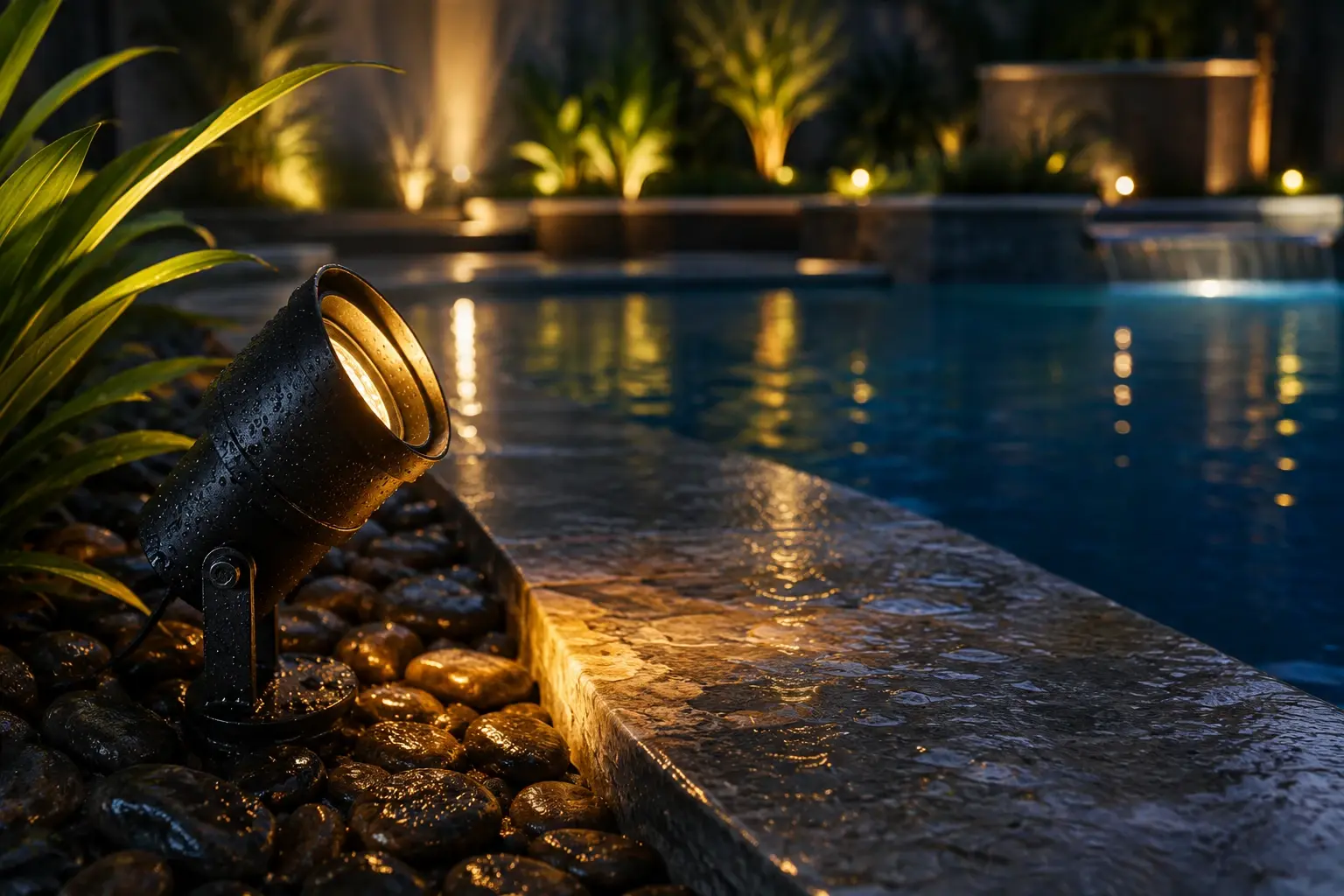
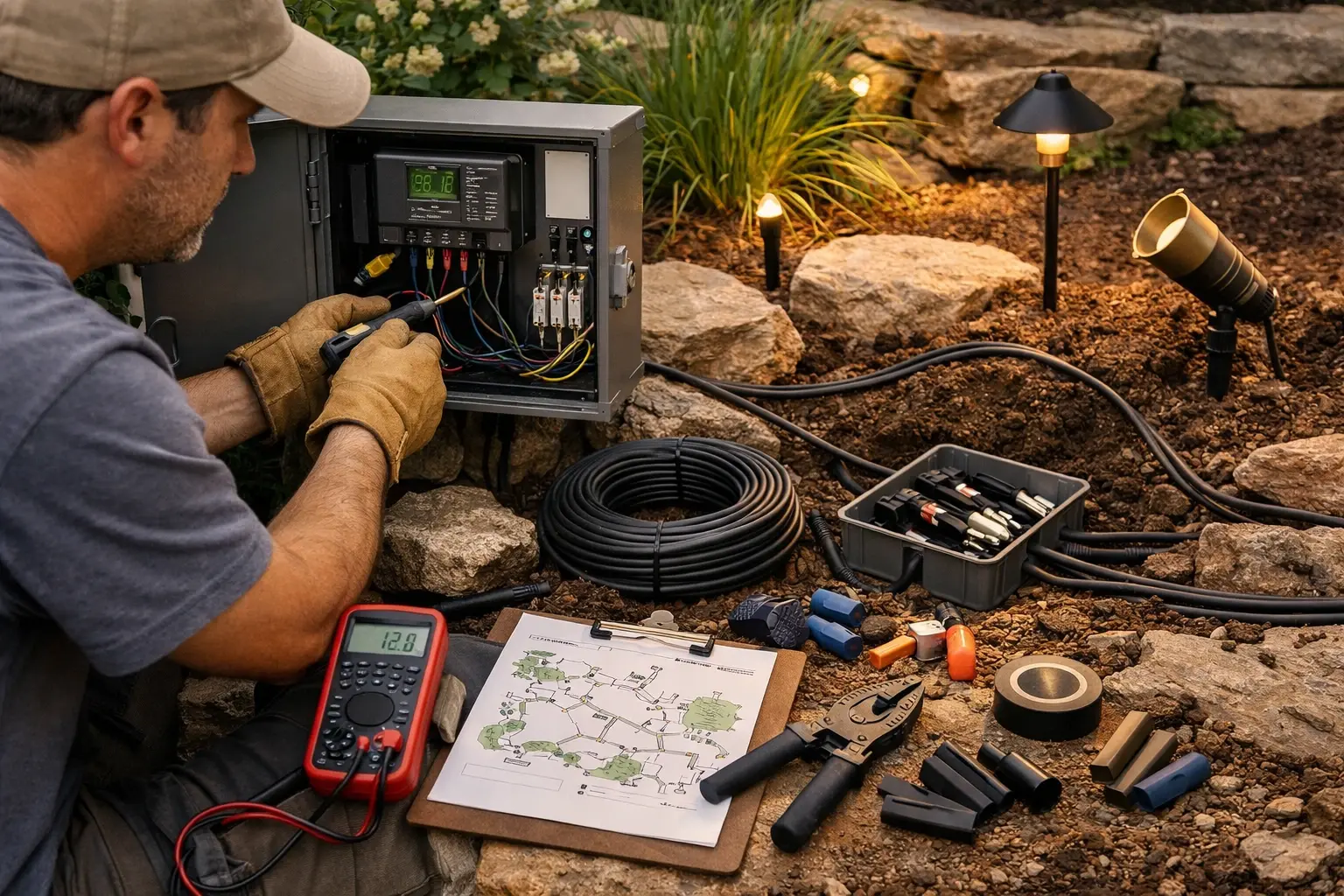
Fixtures are brass and copper, which resist chlorinated and salt-system splash far better than aluminum. Color temperature is 2700K throughout to keep the stone warm and the water inviting; the cool blue glow belongs inside the pool, if anywhere, not on the deck. Transformers are mounted well away from the water at a GFCI-protected outlet, and cable runs are kept out of the pool equipment trench. Where fixtures sit near the water within the distances that electrical rules address, we follow those requirements and coordinate bonding with the pool electrician. If you are planning a new pool, involving us before the deck is poured lets us sleeve conduit under the coping, which eliminates visible cable forever. The lighting visualizer is a useful way to preview the effect on your own backyard photo.
Austin-Specific Considerations
Limestone and flagstone decks. The light-colored stone used around most Austin pools reflects a great deal of light, which is good for safety and means fixture output can stay low. We frequently use 1 to 3 watt hardscape fixtures where a client expected something much brighter.
Heat and chemistry. Pool decks are among the hottest surfaces on the property in July and are regularly splashed with treated water. Fixture bodies and lenses are chosen for both, and we avoid plastic lenses that cloud within two seasons.
Trees overhead. Live oaks and cedar elms shading a pool are perfect moonlighting candidates. Downlights mounted in the canopy produce soft dappled light across the deck and surface with no fixtures at ground level at all, and nothing reflects because the source is far above the sightline. See garden and tree lighting for how we mount in trees.
Dark-sky and neighbors. Backyards in Westlake Hills, Lakeway and Dripping Springs often sit above or beside neighbors. Shielded fixtures aimed downward and inward, 2700K lamps and a timer that shuts the perimeter off late at night keep the installation neighborly and consistent with Hill Country dark-sky awareness.
How the Project Runs
- A free on-site design consultation, ideally at dusk, where we check reflections from every seat and identify safety points on the deck.
- A written, no-surprise estimate listing each fixture, its location and purpose, plus the transformer and control plan.
- Coordination with your pool builder or electrician if in-pool lights, bonding or new conduit are involved.
- Installation by licensed and insured technicians, typically completed in one day for an existing pool and deck.
- A night visit to aim fixtures, confirm there are no reflections from the main seating areas and set the timer or app schedule.
Austin Landscape Lighting covers its work with a 2-year workmanship warranty in addition to manufacturer warranties on fixtures and transformers. Planning ranges for pool landscape lighting Austin projects depend on deck size, the number of water features and whether conduit is being set in new construction. These are planning figures rather than quotes; your written estimate is exact.
Make the Pool the Center of Your Evenings
A pool that is lit well feels calm, safe and twice as inviting after dark. Austin Landscape Lighting will design the perimeter, hide the fixtures and coordinate with your pool contractor so everything is done once and done right. Call +1 (281) 704-7210 or schedule a free design consultation for your pool and backyard.
Recent pool & water feature lighting work
Pool & Water Feature Lighting FAQ
Do you install the lights inside the pool?
In-pool and in-spa lights are installed by your pool builder or a pool electrician because of the bonding and electrical requirements specific to pool shells. We design and install everything around the pool: deck, walls, steps, beds, trees and water features, and we coordinate with the pool contractor so both systems work together.
How do you keep lights from reflecting off the water?
By keeping fixtures out of the sightlines from seating areas. We avoid placing fixtures close to the water edge, use shielded hardscape and downlights aimed away from the pool, and rely on lit trees and walls beyond the water to create a glowing perimeter. We check reflections from every seat during the night aiming visit.
Is low-voltage lighting safe near a pool?
Yes, when installed to the applicable electrical rules. Low-voltage 12V systems are inherently safer than 120V, but there are still minimum distances from the water for fixtures and transformers and bonding requirements in some locations. Our licensed technicians follow those rules and coordinate with your pool electrician where bonding is involved.
What color light works best around a pool?
Warm 2700K for everything on the deck and in the landscape. It keeps limestone and flagstone looking warm, flatters people and avoids the harsh blue cast that makes a backyard feel like a parking lot. Colored or cool in-pool lights, if you have them, contrast nicely against a warm perimeter.
Should I plan lighting before or after the pool is built?
Before, if possible. When we are involved during construction we can sleeve conduit under the coping and deck, set hardscape lights into walls as they are built and avoid trenching through finished beds. Lighting an existing pool works well too; it just relies more on fixtures placed at the edges of the hardscape.