
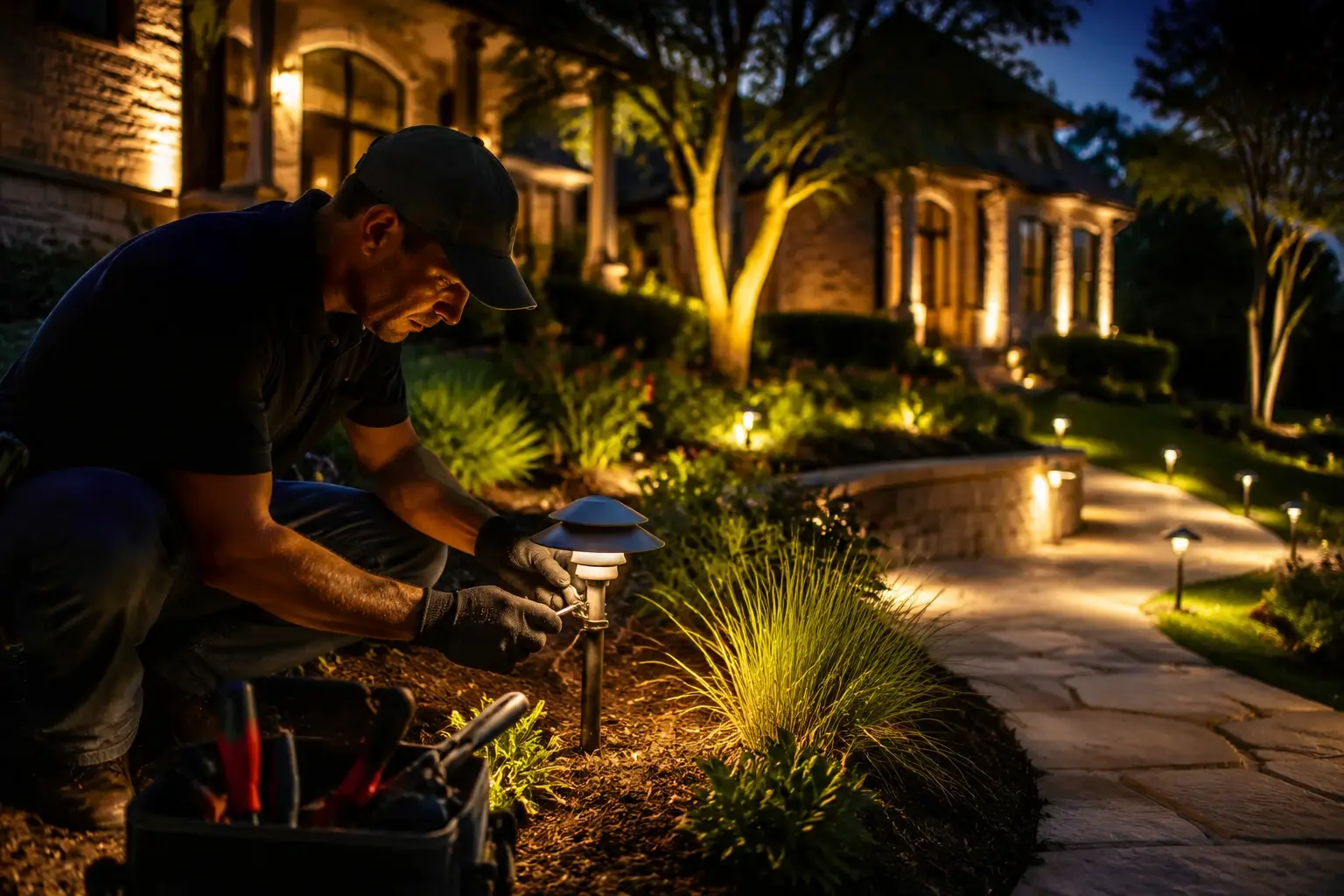
- We service systems we did not install
- Transformer and cable diagnosis
- Seasonal re-aiming and cleaning
- Written estimate before repairs
Why Landscape Lighting Systems Fail in Austin
Landscape lighting lives in a hard environment. It is buried in alkaline caliche soil, soaked by irrigation every morning, baked at 140 degrees on a July afternoon, chewed by string trimmers, dug up by dogs and buried under live oak leaf litter twice a year. Even well-built systems need attention, and systems built with aluminum fixtures and pierce-style connectors start failing within a few seasons. Landscape lighting repair Austin homeowners call us for almost always traces back to one of a handful of causes:
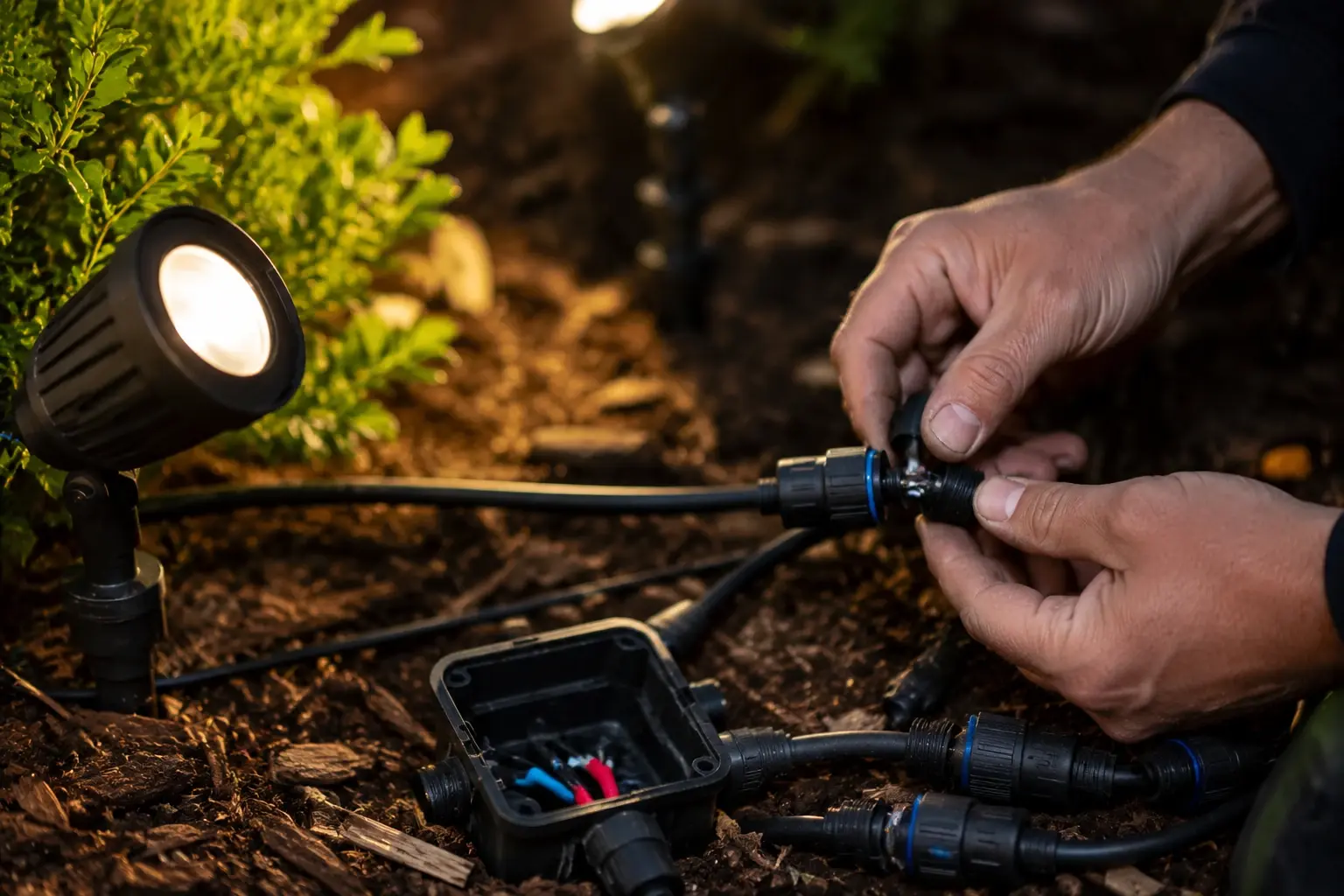
- Corroded connections. The most common failure by far. Pierce-point clips and twist-on connectors let moisture in, the copper oxidizes, resistance climbs and fixtures dim, flicker or die one at a time.
- Cut or damaged cable. Edging tools, new plantings, irrigation repairs and fence posts all find buried cable.
- Transformer problems. Failed photocells, dead timers, tripped breakers inside the unit and, on older magnetic transformers, taps set so high that LED lamps are overdriven.
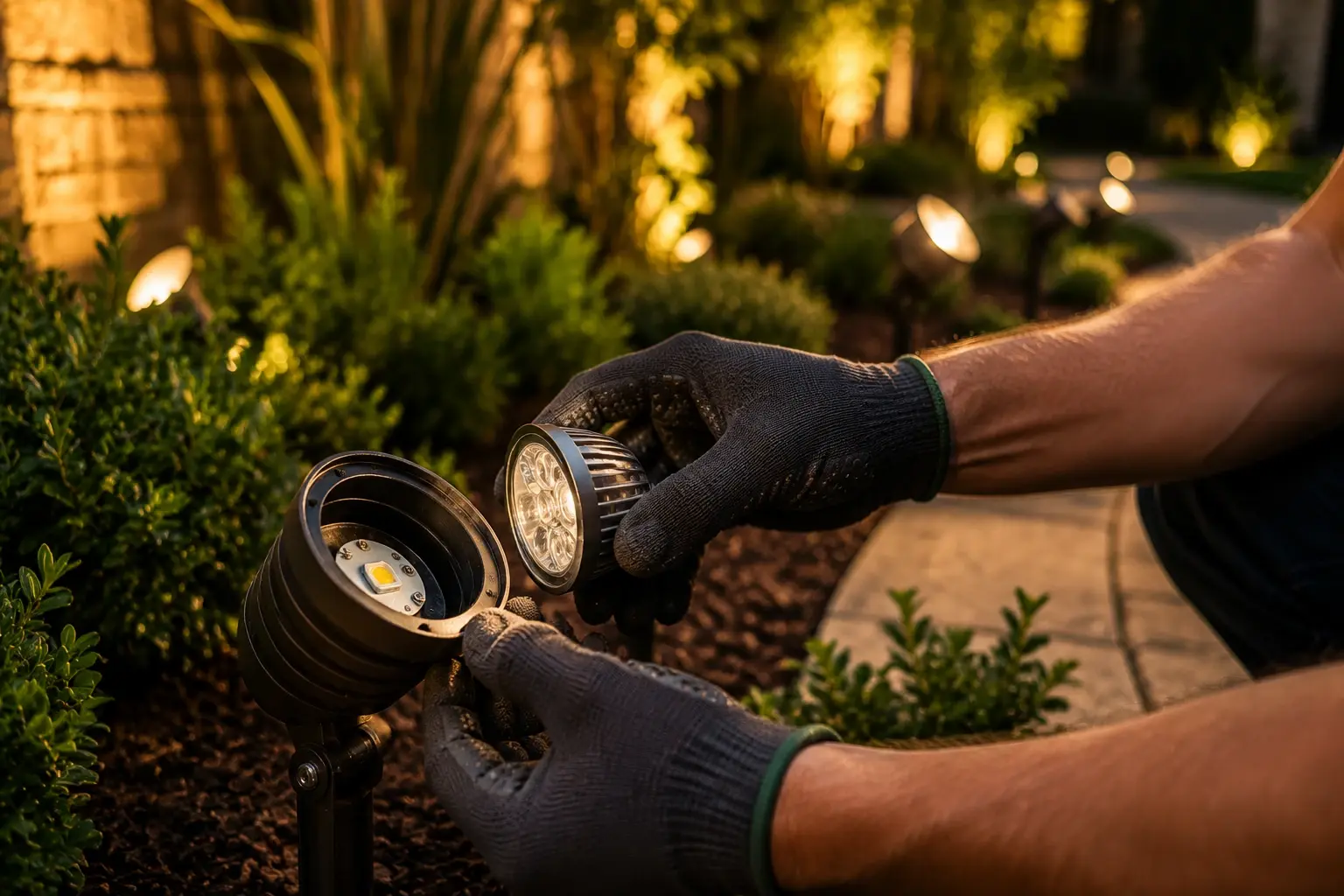
- Fixture failures. Cracked lenses, flooded sockets, corroded aluminum bodies, failed integrated LED drivers and lamps that were never rated for enclosed fixtures.
- Voltage drop. Systems expanded over the years without re-sizing cable, so the last fixtures on the run are dim and yellow while the first are bright.
- Grown-in landscaping. The system works perfectly; the agave is simply three feet taller than it was when the fixture was aimed.
Austin Landscape Lighting repairs systems regardless of who installed them or what brand they are. Many of the 500+ projects we have completed since 2020 began as a repair call on someone else's installation.
How a Repair Visit Works
Diagnosis
We start at the transformer: input voltage, output on each tap, timer and photocell operation, and whether the unit is appropriately sized for the connected load. Then we measure voltage at the first and last fixture on each run, which tells us immediately whether the problem is a connection, a cable fault or an undersized circuit. A cable fault locator finds breaks and shorts without digging up the whole bed.
Repair
Every connection we open is remade with a waterproof gel-filled connector. Cable breaks are spliced with direct-burial rated splices and re-buried at depth. Failed lamps are replaced with 2700K LEDs matched to the rest of the system so the yard does not end up with three colors of white. Fixtures that are beyond saving are replaced with brass units on the existing cable; we will tell you honestly when a lamp swap is enough and when the fixture body has failed.
Re-aim and reset
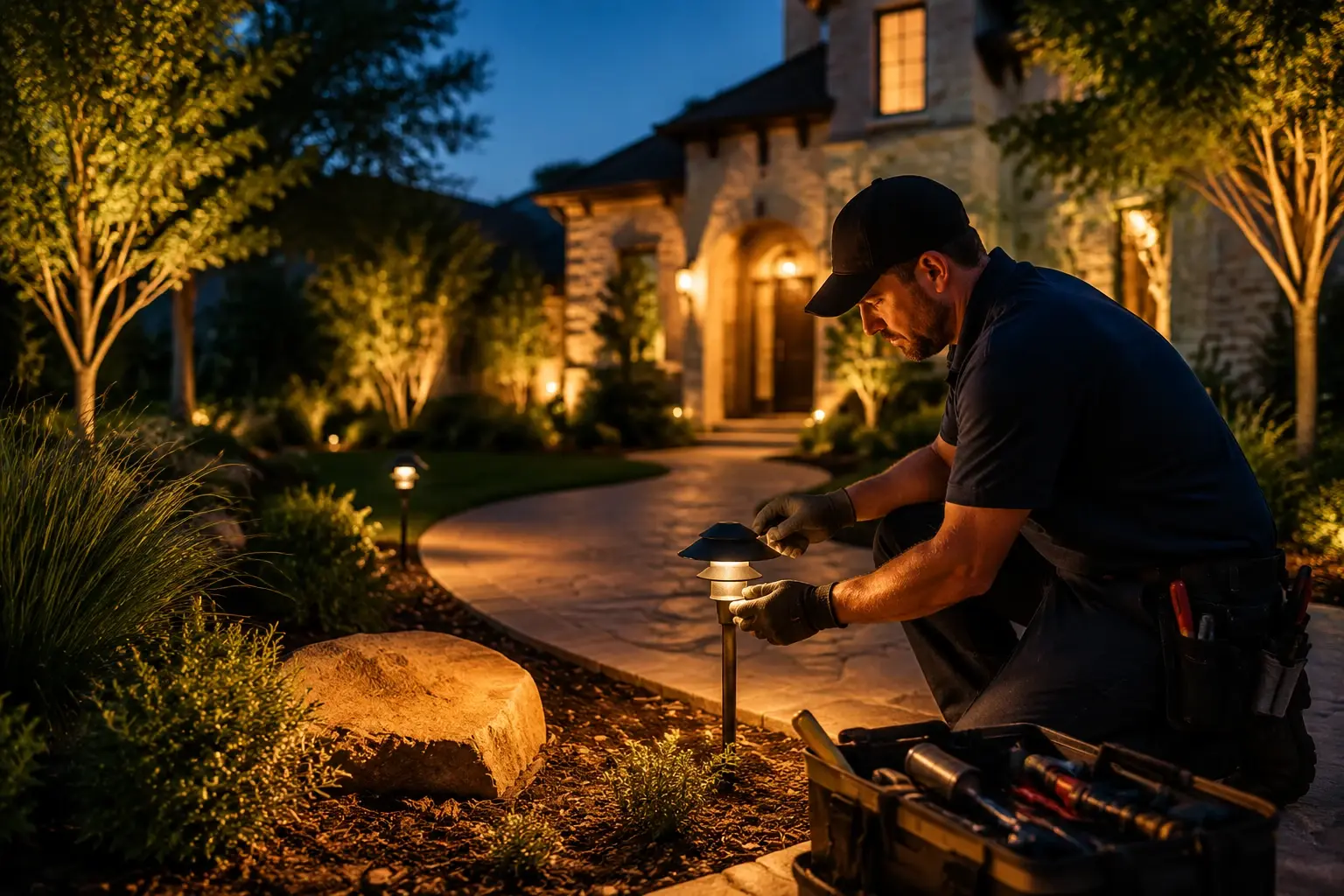
Before we leave, we re-aim fixtures that have been knocked or grown over, clean lenses, reset the timer and confirm every fixture is lit. For an older halogen system, the repair visit is often the right time to discuss an LED upgrade, since re-lamping twenty halogens one more time rarely makes sense.
Typical Repair Scenarios and Planning Ranges
| Situation | Usual cause | Planning range |
|---|---|---|
| One or two fixtures dark | Lamp or connection | $150 – $350 |
| Whole run dim or flickering | Corroded connections, voltage drop | $300 – $800 |
| Entire system dead | Transformer, breaker, timer or cable short | $250 – $1,200 |
| Cable cut by landscaping work | Physical damage | $200 – $600 |
| Transformer replacement | Age, undersizing, failed components | $600 – $1,800 |
These are planning ranges only, not quotes. You receive a written, no-surprise estimate after diagnosis and before any repair work begins.
Maintenance Plans
A lighting system that Austin Landscape Lighting checks twice a year rarely needs a repair call. Our maintenance visits include:
- Testing transformer output and resetting the timer for the season.
- Measuring voltage at the end of each run to catch corrosion early.
- Cleaning lenses and removing mineral deposits from irrigation spray.
- Trimming foliage that has grown in front of fixtures and re-aiming where plants or trees have changed.
- Straightening and re-staking fixtures disturbed by mowing, deer or settling soil.
- Replacing any failed lamp with a matching 2700K LED.
- Inspecting tree-mounted fixtures and loosening straps as trunks and branches grow.
Spring and fall visits line up with Austin's seasons: spring to deal with live oak leaf drop and new growth, fall to reset timers as sunset moves earlier and to prepare for the holiday season when the yard gets the most use. Commercial properties typically choose quarterly service; see our commercial landscape lighting page for how that is structured.
Austin-Specific Notes
Caliche soil holds moisture against connectors and is abrasive on cable jackets, which is why connection quality matters more here than in sandy regions. Irrigation water in much of Central Texas is hard and leaves white deposits on lenses that noticeably cut output within a season. Deer in Lakeway, Bee Cave and Westlake Hills knock stake-mounted fixtures out of aim regularly. Live oaks shed enough in spring to bury path lights. None of this is a reason not to have landscape lighting; it is a reason to have it checked twice a year by someone who knows what to look for.
Warranty and Scheduling
Every repair carries a 2-year workmanship warranty from Austin Landscape Lighting, and replacement fixtures, lamps and transformers carry their manufacturer warranties. Repair visits are scheduled Monday through Friday from 8am to 6pm and Saturdays from 9am to 2pm, and most residential repairs are completed in a single visit. For landscape lighting repair Austin homeowners can count on being done right the first time, call +1 (281) 704-7210 or describe your problem online and we will schedule a diagnosis.
Recent maintenance & repair work
Maintenance & Repair FAQ
Do you repair landscape lighting systems you did not install?
Yes. We service systems of any brand and any age, including halogen systems from the 1990s and 2000s and newer LED systems installed by other companies or homeowners. Diagnosis is the same regardless of brand: transformer, connections, cable and fixtures. Repairs we make carry our 2-year workmanship warranty.
Why are the fixtures at the end of my run dimmer than the others?
That is voltage drop. Cable has resistance, and the farther a fixture is from the transformer the less voltage it receives, which halogens show as dim yellow light and some LEDs show as flicker. Fixes include resetting transformer taps, splitting the run into two circuits, adding a hub or upgrading the cable gauge.
My whole system went dark at once. What is the likely cause?
Usually the transformer: a failed photocell, a timer that lost its program, a tripped internal breaker or a GFCI outlet that tripped during a storm. A short from a cut cable can also trip the breaker. We check the outlet and transformer first, then isolate circuits to find any short before replacing parts.
How often should landscape lighting be maintained in Austin?
Twice a year for most homes, in spring after live oak leaf drop and in fall when sunset moves earlier. Each visit covers transformer and voltage checks, lens cleaning, re-aiming, foliage trimming and lamp replacement. Commercial properties and homes with large tree-mounted systems often choose quarterly visits.
Is it worth repairing an old halogen system or should I replace it?
It depends on the fixtures and cable. Brass fixtures with sound cable are worth keeping and converting to LED lamps. Corroded aluminum fixtures with pierce-clip connections usually cost more to keep patching than to replace. After diagnosis your written estimate shows both options so you can compare.