
- Free on-site design consultation
- Night demonstration before install
- Layered plan with fixture schedule
- Built to grow with your landscape
Design Is What You Are Actually Buying
Two properties can have the same number of fixtures, the same brass hardware and the same transformer, and one will look like a magazine photograph while the other looks like someone lit everything they could reach. Fixtures are a commodity. Landscape lighting design Austin homeowners remember is about decisions: what to light, what to leave dark, how bright each element should be relative to the others, where the eye should go first and where the viewer will be standing when they look.
Austin Landscape Lighting was built around that idea in 2020. Every one of our 500+ projects started with a design visit rather than a fixture count, and this page explains what that process looks like and why it produces better results.
Our Design Principles
Hierarchy
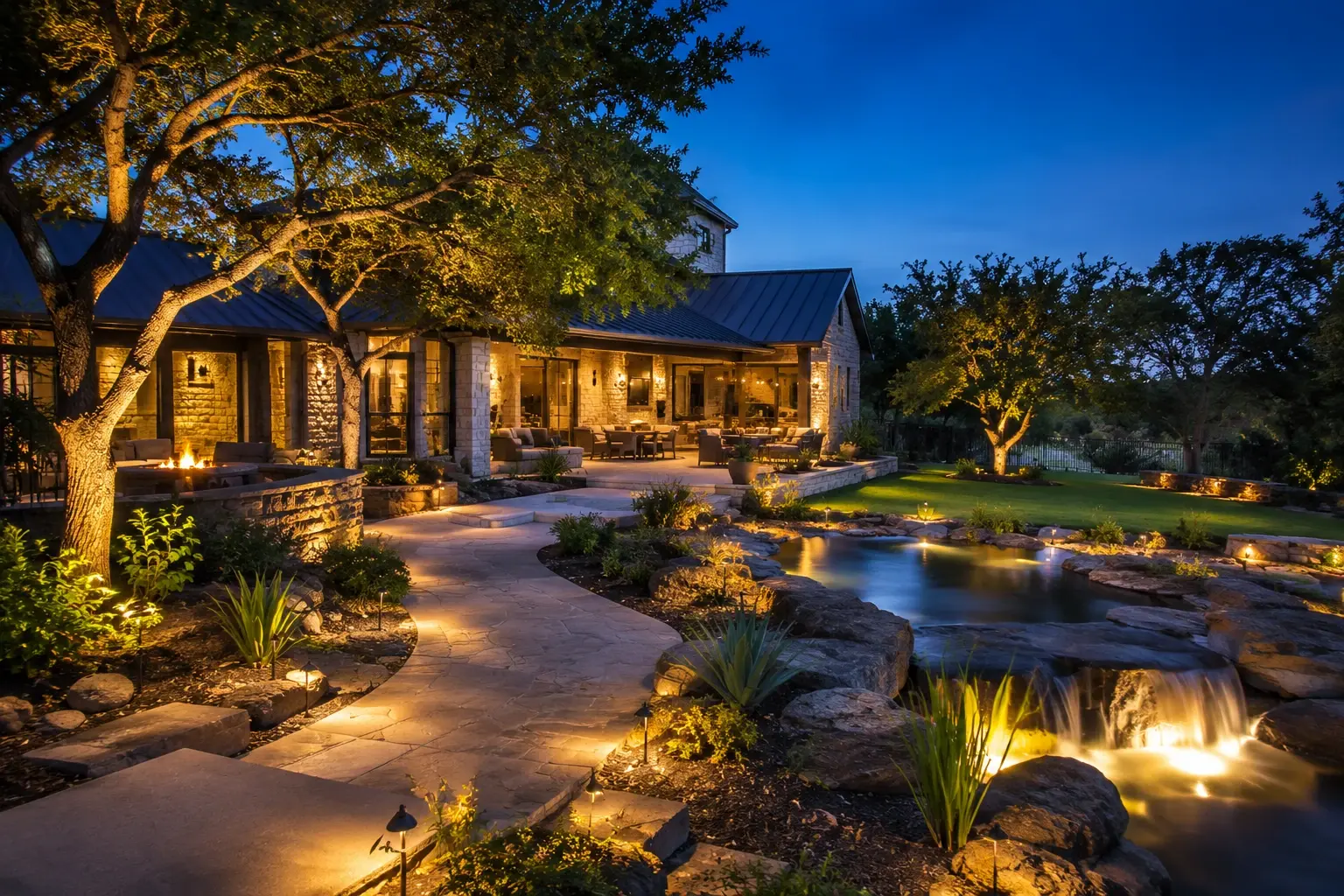
Every property has one or two features that deserve to be the brightest thing in view: a specimen live oak, the stone entry, a water feature. Everything else is secondary or supporting. We assign each element a relative brightness so the composition has a focal point, a middle ground and quiet areas. Without hierarchy, a yard reads as flat and busy no matter how many fixtures it has.
Layers
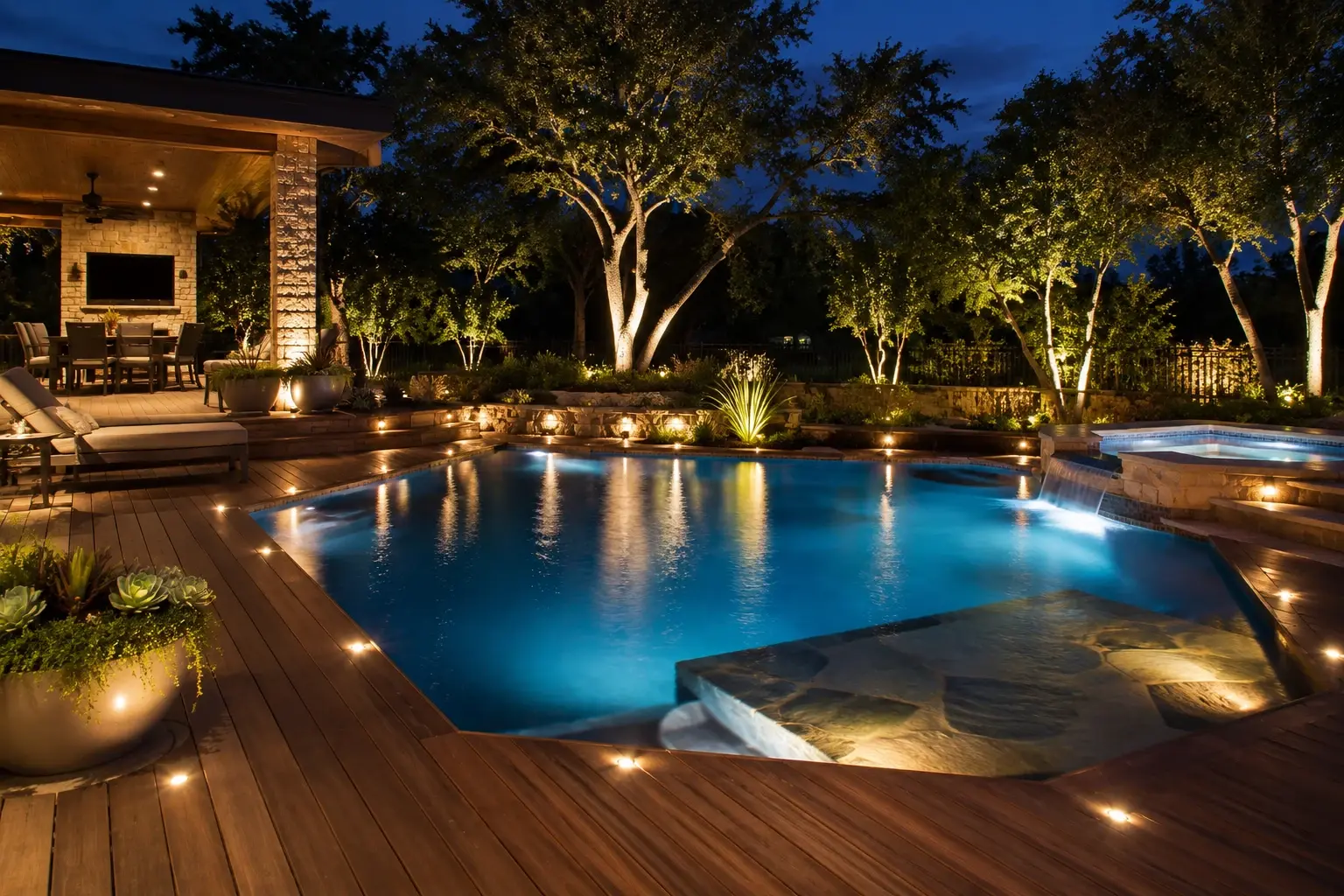
A complete design has four layers that work together: architectural light on the house, canopy and garden light on trees and beds, safety light on paths and steps, and living-space light on patios and decks. Each layer is on its own zone so the balance can be adjusted. Our pages on architectural uplighting and garden and tree lighting go deeper into the first two.
Viewpoints
We design from where people actually stand: the street approach, the front door, the kitchen window, the patio seating. A fixture that looks perfect from the driveway and glares from the living room sofa is a design failure, so each major fixture is checked against every main viewpoint during the night demonstration.
Darkness as a material
The unlit spaces between elements are as deliberate as the lit ones. Restraint gives a design depth and keeps it dark-sky friendly. A common outcome of our consultation is recommending fewer fixtures than the homeowner expected, placed more carefully.
Consistency
One color temperature, 2700K, across the property unless there is a specific reason to vary it. Matched fixture finishes. Beam spreads chosen for each target rather than one spread everywhere. Mixing color temperatures is the quickest way to make a design look amateur, and our color temperature guide shows why with side-by-side examples.
The Design Process
- Consultation walk. Free, on site, scheduled in the hour before dusk when possible. We talk about how you use the property, what you want to see from inside, which neighbors or windows need protecting from spill, and any HOA requirements. We photograph each elevation and major tree.
- Concept. We identify the hierarchy, propose the layers and sketch fixture locations on your site photos. For larger projects you can preview effects with our online lighting visualizer tool.
- Night demonstration. We return with demonstration fixtures and light the two or three most important elements so you can see beam spread, brightness and color on your own stone and trees before committing.
- Fixture schedule and estimate. A written, no-surprise estimate listing every fixture with its location, purpose, beam spread and lumen output, plus transformer sizing, zoning and control plan. Dollar figures are exact in the estimate; the range on this page is for planning only.
- Installation and aiming. Licensed and insured technicians install most residential systems in one day, followed by a night aiming visit where the design is fine-tuned fixture by fixture.
Designing for Austin
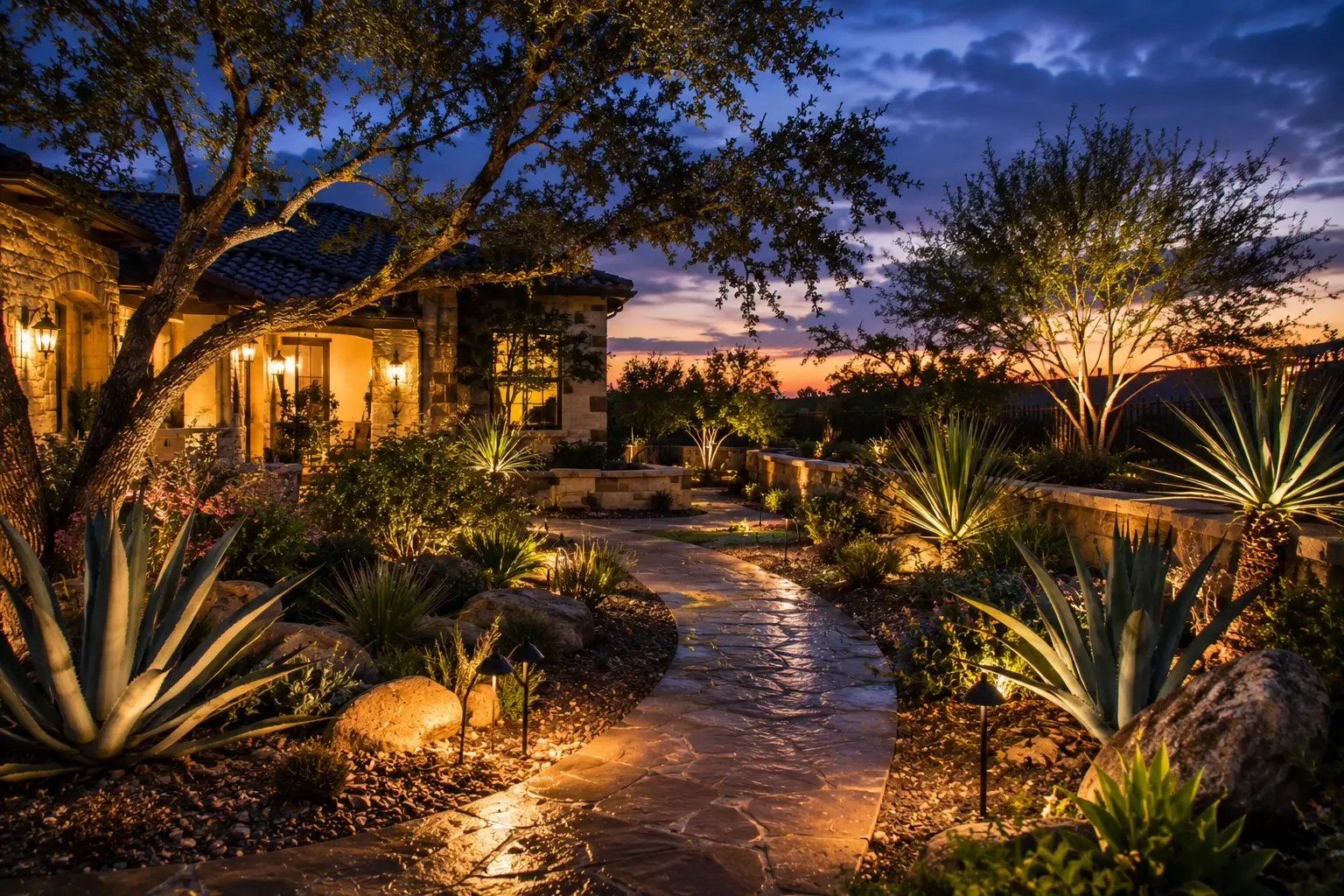
Architecture. Austin's housing stock ranges from 1940s bungalows in Rollingwood to limestone Hill Country estates in Bee Cave and sharp stucco moderns in East Austin. Each wants a different approach: grazing for texture on stone, clean washes on stucco, warm pools at the entry of a bungalow. We design to the architecture rather than applying one look.
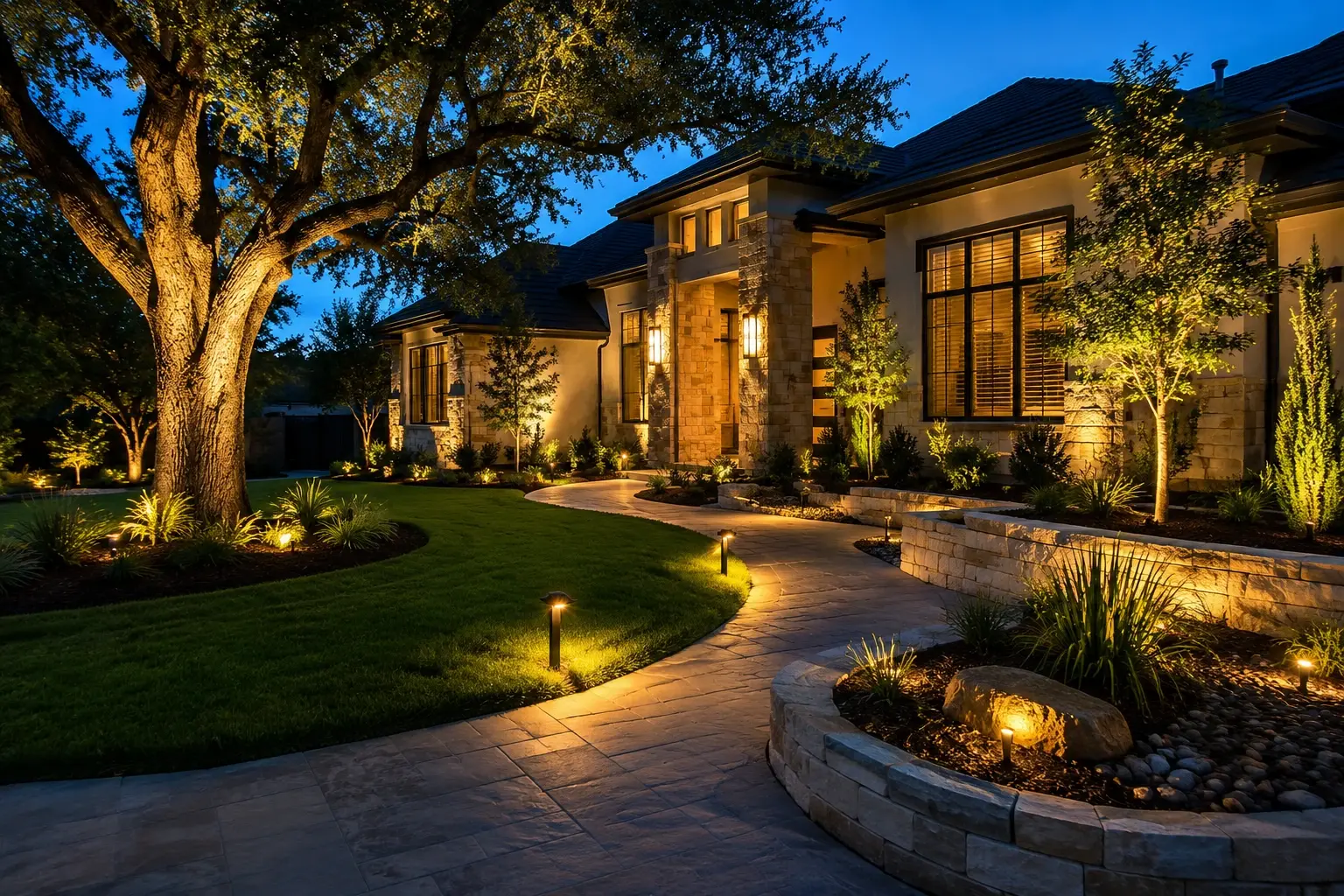
Trees. Live oaks, cedar elms, crape myrtles and Texas mountain laurel are usually the strongest elements on a lot and often set the hierarchy. A design that ignores a 50-foot live oak to light the garage is a missed opportunity we see often.
Terrain. Hill Country slopes create grade changes, retaining walls and multiple viewpoints from different levels. Terraced lots in Westlake Hills and Lakeway often need the design worked out from both the street below and the house above.
Climate and soil. Brass fixtures, sealed connections and heat-rated LED drivers are specified in every design because of summer temperatures, irrigation exposure and caliche soil.
Dark-sky and HOA. Shielded fixtures, 2700K color, light kept on surfaces rather than in the sky and timed shutoff are part of every plan, not an add-on. We supply layout drawings for architectural committees across Austin, Georgetown, Round Rock and the Hill Country communities and have not had a design turned down.
What You Receive
- A fixture schedule and marked-up site plan you can keep and reference for future changes.
- Zoning and control recommendations, including smart control where it adds value.
- A phasing option if you prefer to build the system over two or three stages; the design accounts for future transformer capacity and cable routes from day one.
- A 2-year workmanship warranty from Austin Landscape Lighting on the installed system plus manufacturer warranties on fixtures.
Start With a Design, Not a Fixture Count
Good landscape lighting design Austin homeowners can live with for twenty years begins with someone standing on your property at dusk asking the right questions. Austin Landscape Lighting does that for free. Call +1 (281) 704-7210 or schedule your design consultation and we will show you what your property can look like after dark.
Recent custom lighting design work
Custom Lighting Design FAQ
Is the design consultation really free?
Yes. The on-site consultation, concept sketch on your site photos and night demonstration of key fixtures are provided at no charge for properties in our Austin-area service territory. You receive a written fixture schedule and estimate afterward and decide whether to proceed. There is no obligation and no deposit until you approve the plan.
Can the design be installed in phases?
Yes, and many clients do it that way. We size the transformer and route cable for the complete design from the start, then install the front elevation first and the backyard or trees in a later phase. Phasing avoids rework and keeps the finished system consistent in color, fixtures and control.
Do I need to choose fixtures myself?
No. The fixture schedule specifies each fixture by type, beam spread and output for its specific job, all in brass or copper with 2700K LEDs. We will show you the finish options and demonstrate the key fixtures at night. If you have a preference for a particular style or brand, we will design around it.
How is a professional design different from a do-it-yourself kit?
Kits provide identical fixtures spaced evenly with one beam spread and often mixed color temperatures, powered by an undersized transformer. A professional design assigns each fixture a specific target, output and beam, builds a hierarchy and layers, controls glare from every viewpoint and sizes wiring correctly. The difference is visible from the street.
Will the design account for plants and trees growing?
Yes. Fixtures are placed and aimed with mature plant sizes in mind, tree mounts leave slack for growth, and adjustable stakes allow re-aiming. Our maintenance visits include trimming foliage and re-aiming as the landscape evolves, so the design keeps working as the garden matures rather than disappearing behind it.