
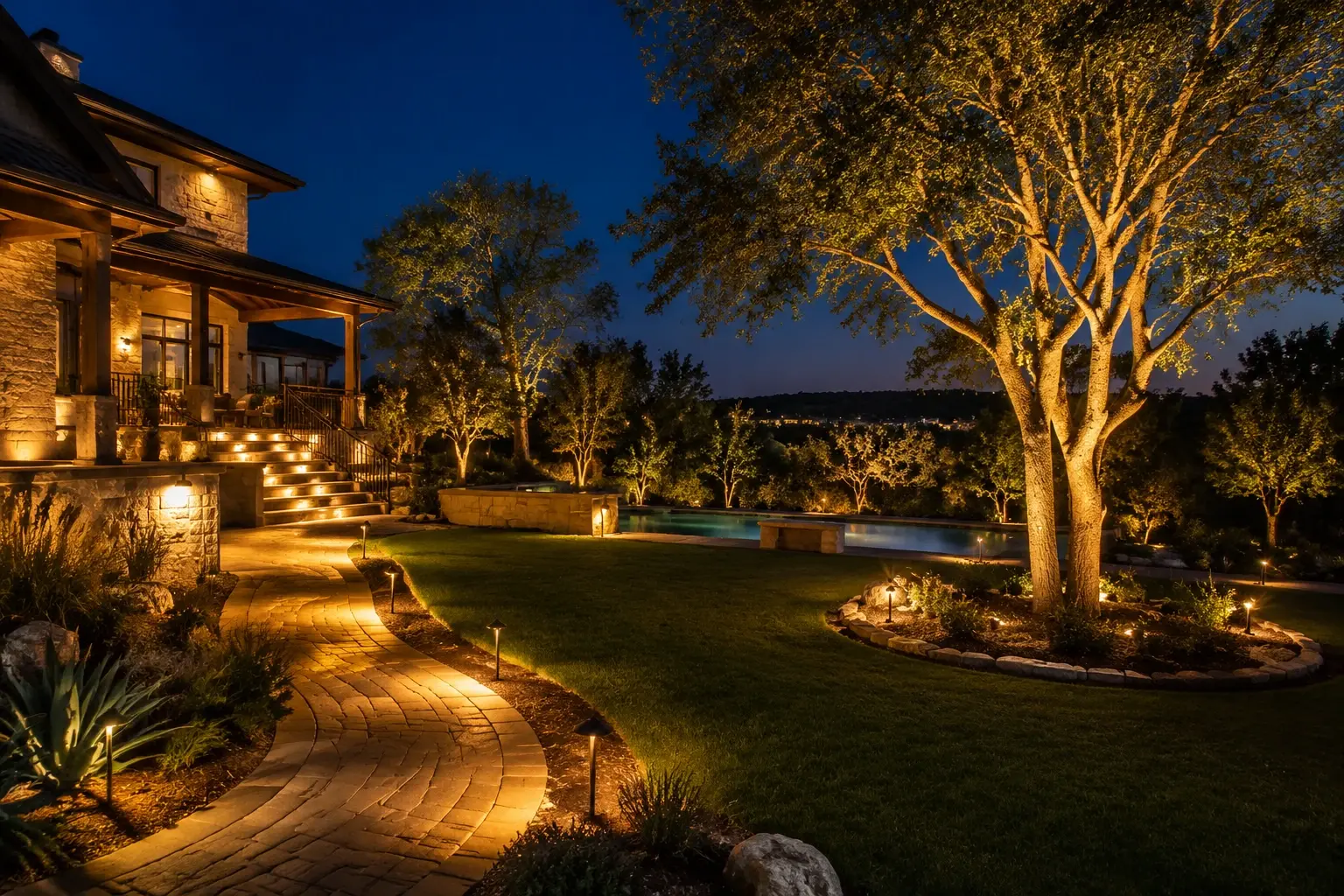
- Brass fixtures, 2700K warm white
- Glare-free, dark-sky aware aiming
- Most facades installed in one day
- 2-year workmanship warranty
What Architectural Uplighting Does for an Austin Home
Architectural uplighting is the practice of placing fixtures at ground level and aiming them upward to reveal the shape, texture and rhythm of a building after dark. Instead of a porch light that creates one bright spot and leaves the rest of the facade black, uplighting draws the eye across columns, gables, stone piers and the deep eaves that are so common on Austin homes. Done well, it makes a house look taller, more settled on its lot and far more welcoming from the street.
Austin architecture rewards this approach more than most cities. Limestone and Austin stone facades have pits, ledges and color variation that come alive under a grazing beam. Stucco Hill Country contemporaries have crisp planes and shadow lines that read beautifully with a narrow spot. Even a modest brick ranch in Pflugerville or Round Rock gains dimension when the corners are defined and the entry is framed. Austin Landscape Lighting has completed more than 500 projects across the region since 2020, and the architectural uplighting Austin homeowners request is consistently the first layer we design because it anchors everything else in the yard.
How We Design and Install Architectural Uplighting
Reading the facade first
Every project begins with a free on-site design consultation, ideally in the late afternoon so we can walk the elevation and then watch how it falls into shadow. We note the materials, the height of each plane, where the roofline breaks and where windows sit. Bedrooms facing the front matter: a fixture aimed carelessly below a window will wash light across the ceiling inside, so we plan beam angles to stop at the sill or skip that bay entirely.
Fixture selection and beam spreads
We install low-voltage 12V LED fixtures in solid brass or copper, chosen because they survive Austin heat, irrigation overspray and alkaline caliche soil without pitting or cracking the way aluminum and plastic housings do. Beam spread is the main design decision for each fixture:
- Narrow spots (10 to 15 degrees) for tall chimneys, two-story columns and slender stone piers.
- Medium spots (25 to 35 degrees) for most single-story walls and the space between windows.
- Wide floods (45 to 60 degrees) set close to the wall for a soft grazing wash across textured limestone.
- Wall-wash fixtures for smooth stucco or siding where you want even coverage without hot spots.
Lumen output is kept modest, typically 200 to 450 lumens per fixture. More light is rarely better. Contrast is what creates depth, and the darkest parts of the facade are as important as the lit ones.
Color temperature and placement rules
We standardize on 2700K warm white for architectural work. It flatters cream and tan limestone, warms up gray stone and matches the color of light spilling from inside the house. Cooler 3000K is occasionally used on very white modern facades, and anything above that tends to look clinical. Our color temperature guide shows side-by-side examples if you want to compare before deciding.
Placement follows a few rules we rarely break. Fixtures sit 12 to 24 inches from the wall for grazing, or 3 to 6 feet out for a smoother wash. Each fixture is aimed at a defined feature rather than spaced evenly for its own sake. Glare is controlled with shields and by keeping the lamp below eye level from the sidewalk and the street. Fixtures are set in mulch or planting beds whenever possible so mowers and string trimmers never meet them.
Wiring and transformer notes
A typical front elevation runs 8 to 14 fixtures on a 150 to 300 watt stainless steel transformer with a built-in photocell and astronomical timer. We wire in a hub or loop configuration so every fixture sees nearly identical voltage, which keeps color consistent across the facade and extends LED life. Direct-burial 12-gauge cable is trenched 6 inches deep, and every connection is made with waterproof gel-filled connectors rather than the pierce-style clips that fail after two Austin summers.
Austin-Specific Considerations
Trees change the plan. Many Austin front yards have a live oak or cedar elm standing between the street and the house, and its canopy will either block or beautifully frame the uplit facade. We often add one or two tree uplights so the house and the tree read as a single composition rather than competing. See our garden and tree lighting page for how those layers combine.
Heat and soil matter for hardware. Summer surface temperatures in exposed beds can exceed 140 degrees, so we use fixtures with proper heat sinking and avoid sealed plastic housings. Caliche is hard to trench and holds moisture unevenly, so cable depth and connector quality are not places to economize.
Dark-sky awareness is part of good design here, especially in Westlake Hills, Bee Cave, Lakeway and Dripping Springs where neighbors value the night sky. Shielded fixtures, warm 2700K lamps, careful aiming that keeps light on the building rather than past the roofline, and a timer that shuts the system down by 11pm all keep an installation neighborly. Most HOAs in the area accept this kind of restrained lighting without objection, and we are glad to provide a simple fixture layout for HOA review when one is required.
What to Expect
- Consultation. A free on-site visit, usually 45 to 60 minutes, where we discuss goals, walk the elevation and take measurements.
- Written estimate. A fixture-by-fixture proposal with no-surprise pricing and a sketch of placement.
- Installation. Most residential architectural uplighting installs are completed in one day by licensed and insured technicians.
- Night aiming. We return after dark to fine-tune every beam angle, adjust shields and set the timer schedule.
- Warranty. A 2-year workmanship warranty from Austin Landscape Lighting plus the manufacturer fixture warranties, which run considerably longer on brass hardware.
Planning budgets for the architectural uplighting Austin homeowners typically commission fall in the range shown above, driven mainly by fixture count and the number of elevations lit. Those figures are planning ranges rather than quotes. For a quick personal estimate before we visit, try the cost estimator.
Ready to See Your Home in a New Light
A facade that looks ordinary at noon can become the best-looking house on the block at 9pm, and the difference is almost entirely about where the light is placed. Austin Landscape Lighting designs every system on site, installs it with brass fixtures and clean wiring, and returns at night to aim it properly. Call +1 (281) 704-7210 or request your free design consultation and we will schedule a visit this week.
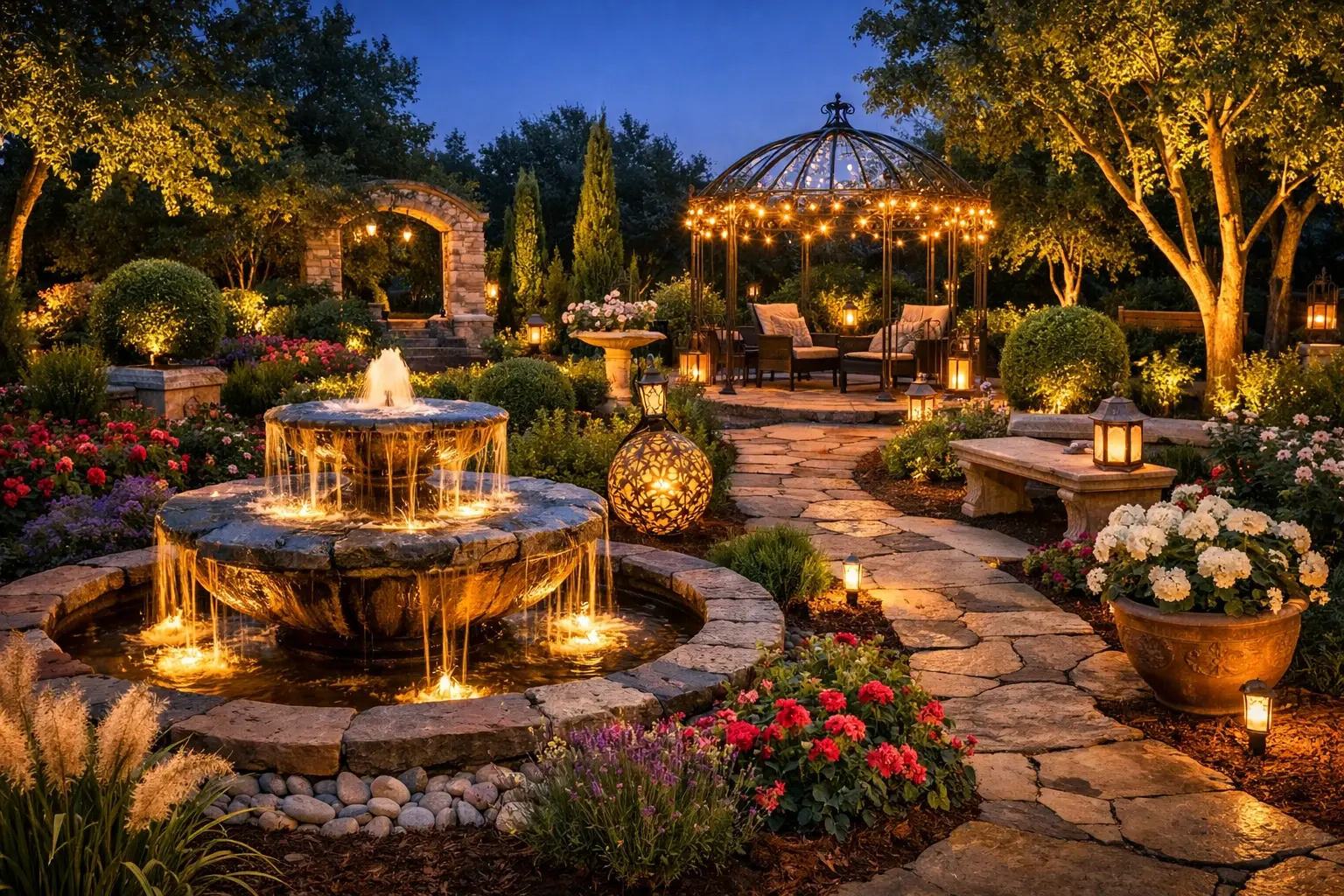
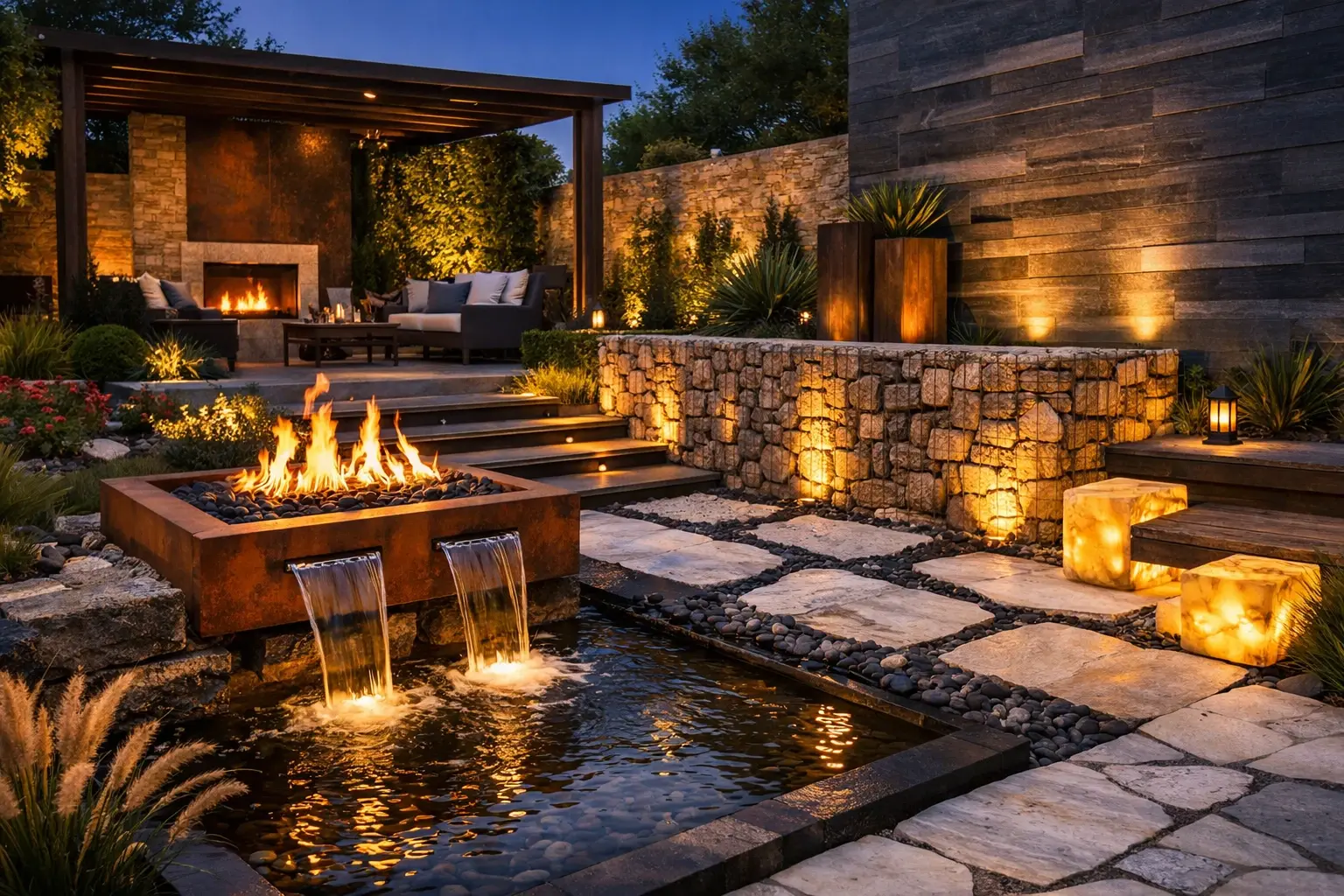
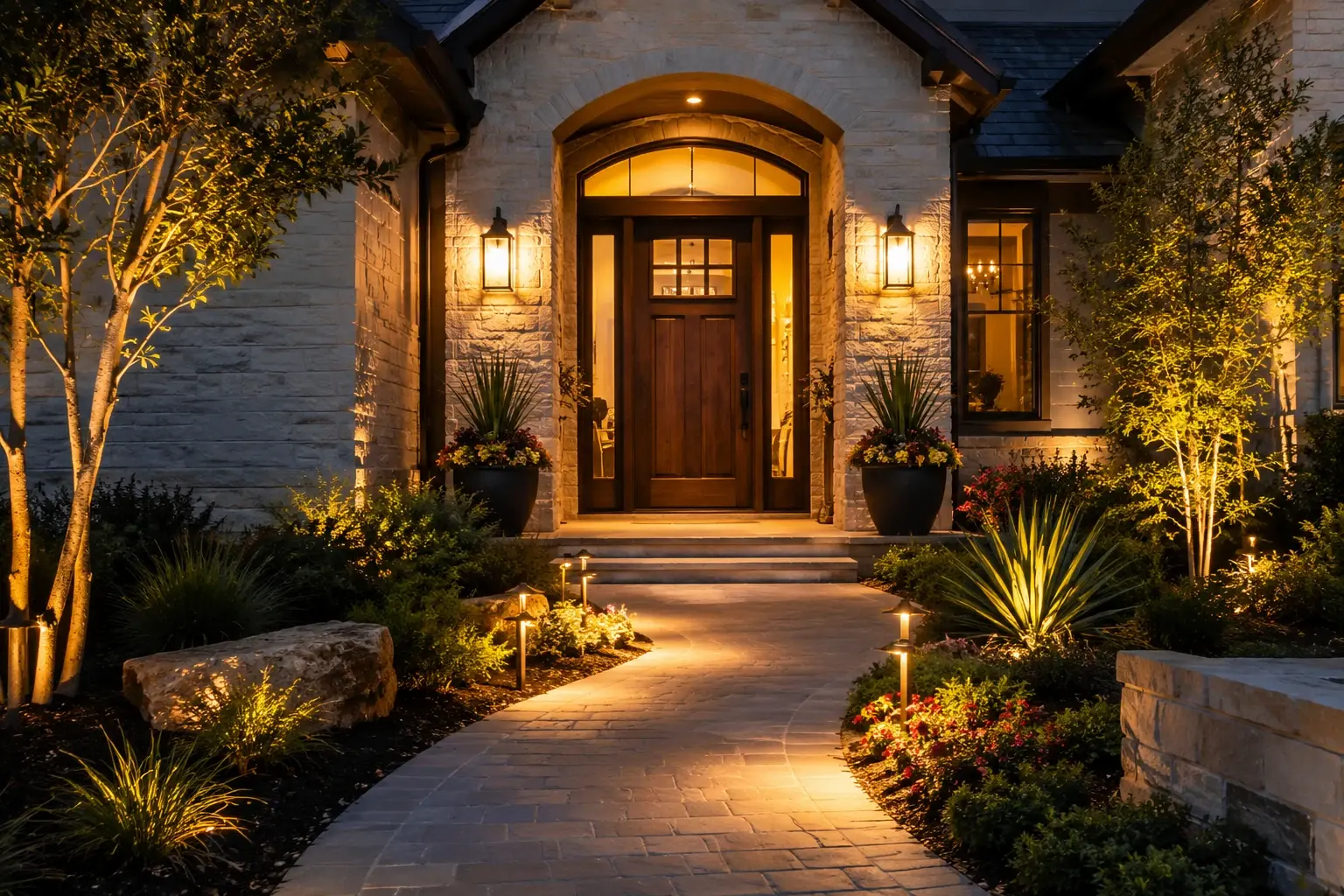
Recent architectural uplighting work
Architectural Uplighting FAQ
Will uplighting shine into my front bedroom windows?
Not when it is aimed correctly. We choose beam spreads that stop at the window sill, offset fixtures to the wall sections between windows and add glare shields where needed. During the night aiming visit we check every window from inside the house and adjust any fixture that spills light where it should not.
How many fixtures does a typical Austin front elevation need?
Most single-story homes use 6 to 10 fixtures and two-story homes use 10 to 16, depending on how many columns, piers and roofline breaks there are. A long ranch with several bays needs more than a compact two-story with a single gable. Your written estimate lists each fixture and what it is aimed at.
Is 2700K the right color for limestone?
In almost every case, yes. Warm 2700K brings out the cream and honey tones in Austin limestone and matches interior light spilling from windows. Very white stucco modern homes sometimes look better at 3000K. We bring both lamps to the consultation so you can see the difference on your own wall.
Does architectural uplighting conflict with dark-sky guidelines or my HOA?
Properly shielded, low-lumen, warm-color fixtures aimed at the building rather than past the roofline are consistent with dark-sky principles and are accepted by the HOAs we work with across the Austin area. We can supply a fixture layout drawing for architectural review committees, and we set timers so the system turns off at a reasonable hour.
Can you uplight a house that already has a few old fixtures?
Yes. We evaluate the existing transformer and cable, keep whatever is sound and replace what is not. Often the best approach is reusing the wire runs while swapping aluminum or plastic fixtures for brass LED units, which is covered on our LED upgrade and retrofit page. Everything we install carries the same 2-year workmanship warranty.